Category: Manuals

instruction manual harley rear wheel assembly diagram

Harley Rear Wheel Assembly Diagram: A Comprehensive Guide

Navigating Harley rear wheel assembly requires detailed diagrams, especially when encountering issues like missing spacers or caliper alignment. OEM parts finders and service manuals are invaluable resources.

Embarking on a Harley-Davidson rear wheel assembly demands precision and a thorough understanding of the process. This guide serves as a comprehensive resource, particularly beneficial when addressing common challenges like identifying missing spacers – a frequent concern reported by owners, leading to unwanted wheel play.

Successfully reassembling a wheel after tire changes, or during custom modifications, hinges on accurate component placement and proper torque specifications. Online forums highlight difficulties aligning the rear caliper mounting bracket, emphasizing the need for detailed diagrams. Accessing exploded views, readily available through OEM parts finders and service manuals, is crucial for a smooth installation. Understanding initial torque values, like the 20 ft-lbs for the axle nut, and subsequent belt tension adjustments, are paramount for safe and reliable operation.

Understanding the Importance of Correct Assembly

Proper Harley rear wheel assembly isn’t merely about fitting parts; it’s fundamentally linked to rider safety and motorcycle performance. Incorrect assembly can induce wheel play, as experienced by some owners discovering missing spacers, compromising stability and control. Misalignment, particularly of the brake caliper mounting bracket – a common issue detailed in online forums – can severely impact braking efficiency.

Adhering to specified torque values, such as the initial 20 ft-lbs on the axle nut, is critical to prevent loosening or damage. Utilizing accurate diagrams, sourced from OEM parts finders and service manuals, ensures correct component orientation and spacing. Neglecting these details can lead to costly repairs, potential accidents, and a diminished riding experience. Therefore, meticulous attention to detail is non-negotiable.

Components of the Rear Wheel Assembly

Essential parts include the wheel hub, axle, bearings, spacers, brake caliper, rotor, and drive belt, all requiring precise alignment for optimal function.

Wheel Hub and Bearings

The wheel hub serves as the central component, securely housing the wheel bearings which facilitate smooth rotation. Proper bearing installation is critical; ensure they are seated correctly within the hub, and adequately lubricated to minimize friction and extend lifespan. Inspect bearings for any signs of wear or damage before assembly, replacing them if necessary.

Harley Davidson diagrams highlight the specific bearing type and orientation required for each model. Pay close attention to spacer placement alongside the bearings within the hub, as incorrect spacing can lead to wheel play or binding. A damaged hub can compromise the integrity of the entire wheel assembly, necessitating replacement. Always refer to the service manual for torque specifications related to hub components.

Axle and Axle Nut

The rear axle provides the structural foundation for wheel mounting, passing directly through the wheel hub and swingarm. Correct axle selection is paramount, ensuring compatibility with your Harley Davidson model and wheel type. The axle nut secures the wheel, applying clamping force to maintain proper alignment and prevent movement.

Initial torqueing of the axle nut to 20 ft-lbs is a crucial first step, allowing for belt tension adjustment before final tightening. Diagrams clearly illustrate the axle nut’s position and the use of any accompanying washers or spacers. Over-tightening can damage the threads or distort the swingarm, while under-tightening poses a significant safety risk. Always use a calibrated torque wrench for accurate results, and consult the service manual for final torque specifications.

Spacers and Their Function

Rear wheel spacers are critical components, maintaining precise wheel alignment within the swingarm and ensuring proper brake rotor and drive belt positioning. These seemingly simple parts prevent unwanted wheel play and ensure even load distribution. Missing or incorrectly sized spacers, as experienced by some Heritage Softail owners, can lead to instability and potential safety hazards.

Exploded view diagrams are essential for identifying the correct spacer configuration for your specific model year. Different Harley Davidson models utilize varying spacer combinations; Carefully note the location and width of each spacer during disassembly to facilitate accurate reassembly. Incorrect spacer placement can cause caliper alignment issues, hindering proper brake function. Always refer to the service manual or OEM parts finder for accurate spacer identification and placement.

Brake Caliper and Mounting Bracket

The brake caliper and its mounting bracket are vital for stopping power, demanding precise installation. Issues with caliper mounting bracket alignment, particularly on 2022 Heritage Softails, are frequently reported, causing difficulty in wheel installation. Ensuring the bracket is perfectly aligned is paramount before attempting to seat the wheel.

Service manual diagrams offer a clear visual guide to proper bracket orientation and bolt torque specifications. Any misalignment, even slight, can obstruct wheel insertion and compromise braking performance; Carefully inspect the mounting points on the swingarm and bracket for damage or debris. Utilize appropriate tools to gently coerce alignment, avoiding forceful adjustments that could damage components. Proper alignment guarantees smooth operation and optimal braking efficiency.

Brake Rotor

The brake rotor is a critical component, directly impacting braking performance and safety. Correct installation involves ensuring the rotor is centered between the caliper brake pads and spins freely without binding. Diagrams from OEM parts finders and service manuals illustrate the rotor’s proper positioning relative to the wheel hub and caliper.

Inspect the rotor for any signs of warping, scoring, or damage before installation. Clean the rotor surface with brake cleaner to remove any oil or contaminants; Securely mount the rotor to the wheel hub, utilizing the appropriate fasteners and torque specifications. Verify that the rotor doesn’t contact the caliper pads during wheel rotation. A properly installed rotor is essential for consistent and reliable braking.

Drive Belt and Alignment

Proper drive belt tension and alignment are paramount for efficient power transfer and preventing premature wear. Refer to the Harley Davidson service manual for specific belt tension specifications for your model year. Initial axle nut torque to 20 ft-lbs, followed by belt adjustment, is a common procedure. Alignment tools are crucial for ensuring the belt runs true between the drive pulley and compensator.

Misalignment can cause belt slapping, noise, and reduced performance. Adjust the rear axle position to achieve correct belt tension and alignment. After adjustment, re-torque the axle nut to the final specified value. Regular inspection and adjustment of the drive belt are vital for maintaining optimal motorcycle operation and longevity.

Tools Required for Rear Wheel Assembly

Essential tools include a torque wrench, socket set, wheel alignment tool, and brake caliper tool for safe and accurate Harley rear wheel assembly and adjustments.

Torque Wrench

A high-quality torque wrench is absolutely critical for Harley rear wheel assembly. Incorrect torque values can lead to wheel instability, bearing damage, or even catastrophic failure during operation. The initial axle nut torque, as specified in service manuals and online forums, is 20 ft-lbs.

However, this is just the first stage; proper belt tension adjustment must precede final tightening. Using a torque wrench ensures consistent and accurate application of force, preventing over- or under-tightening. Digital torque wrenches offer increased precision and often feature audible alerts when the target torque is reached. Always consult your Harley Davidson service manual for the precise torque specifications for your specific model year and wheel configuration.

Remember to recalibrate your torque wrench periodically to maintain accuracy.

Socket Set

A comprehensive socket set, encompassing both metric and standard sizes, is indispensable for Harley rear wheel assembly. You’ll need sockets to remove the axle nut, caliper mounting bolts, and potentially other components depending on your specific model. Impact sockets are recommended for the axle nut due to the high torque involved, minimizing the risk of rounding the fastener.

Deep sockets are particularly useful for reaching recessed nuts and bolts. Having a variety of socket drive sizes (1/2″, 3/8″) provides versatility. Ensure your sockets are in good condition, free from rust or damage, to prevent slippage and potential injury. A quality socket set, combined with the correct torque wrench, will streamline the assembly process.

Don’t forget extensions and a universal joint for accessing difficult angles.

Wheel Alignment Tool

Precise wheel alignment is crucial for safe and optimal Harley-Davidson performance, and a dedicated wheel alignment tool significantly simplifies this process. Misalignment can lead to premature tire wear, handling instability, and even drive belt issues. These tools typically consist of a long, adjustable bar with indicators to measure the wheel’s position relative to the swingarm and frame.

Using the tool ensures both wheels are perfectly parallel, preventing unwanted pulling or tracking problems. Some advanced tools offer adjustments for chain or belt tension simultaneously. Proper alignment minimizes stress on bearings and suspension components, extending their lifespan. Investing in a quality alignment tool is a worthwhile expense for any Harley owner performing rear wheel maintenance.

Regular checks with this tool are recommended after any wheel removal or service.

Brake Caliper Tool

Successfully reinstalling brake calipers often requires a specialized tool to compress the caliper piston, especially after servicing or replacing brake pads. Attempting this without the correct tool can damage the piston or caliper itself, compromising braking performance. These tools are available in various designs, including C-clamp style and dedicated piston compression tools.

A brake caliper tool ensures even pressure is applied to the piston, preventing binding or uneven retraction. Proper piston compression is vital for maintaining adequate brake fluid capacity and optimal braking force. Furthermore, some tools assist with aligning the caliper mounting bracket correctly, addressing issues reported in forums regarding difficult installations.

Using the correct tool guarantees a safe and efficient brake system rebuild.

Step-by-Step Assembly Instructions

Begin by preparing the wheel and hub, then install bearings and spacers carefully. Mount the wheel, attach the rotor, and finally, install the brake caliper securely.

Preparing the Wheel and Hub

Before commencing assembly, thoroughly inspect the wheel and hub for any damage, ensuring the bearing surfaces are clean and free of debris. Verify the presence of all necessary components, referencing an exploded view diagram to confirm. Clean the hub thoroughly, paying close attention to the bearing races. Inspect the wheel for trueness; any significant runout will necessitate correction before proceeding.

Ensure the wheel bearings are in good condition; replace them if they exhibit roughness or excessive play. Lightly grease the bearing races and seals to facilitate smooth installation and prevent corrosion. Double-check the compatibility of the wheel and hub with your specific Harley Davidson model year, as variations exist. Proper preparation is crucial for a successful and safe rear wheel assembly.

Installing Bearings and Spacers

Begin by carefully pressing the bearings into the wheel hub, utilizing a bearing press or suitable socket setup to avoid damage. Ensure bearings are fully seated and rotate freely. Next, identify the correct spacers – a common issue involves missing or incorrect spacer placement, leading to wheel play. Refer to the exploded diagram for precise spacer order and positioning on the axle.

Install the spacers onto the axle, noting their specific locations relative to the hub and caliper bracket. Grease the spacers lightly to prevent corrosion and facilitate smooth axle insertion. Confirm proper spacer orientation; incorrect placement can cause misalignment and bearing failure. Accurate spacer installation is vital for wheel stability and safe operation.

Mounting the Wheel on the Axle

Carefully slide the axle through the swingarm and then through the wheel hub, ensuring the bearings and spacers remain correctly positioned. Pay close attention to alignment; forcing the axle can damage bearings or spacers. Once the axle is through the hub, verify the wheel sits flush against the swingarm. Inspect for any binding or resistance during rotation.

If encountering difficulty, double-check spacer placement and bearing seating. A slightly misaligned caliper bracket can also impede wheel installation. Ensure the caliper bracket is properly adjusted before proceeding; Secure the wheel with the axle nut, but do not fully tighten it at this stage; initial torque is crucial for belt adjustment.

Attaching the Brake Rotor

Position the brake rotor onto the wheel hub, aligning the mounting holes precisely. Ensure the rotor slides smoothly onto the hub splines without any forced pressure. Secure the rotor using the appropriate mounting hardware, typically bolts or screws, tightening them evenly in a star pattern. This prevents warping and ensures consistent braking performance.

Verify the rotor spins freely without rubbing against the caliper or any other components. Inspect for any signs of damage or distortion on the rotor surface. Proper rotor attachment is vital for safe and effective braking. Double-check all fasteners are tightened to the manufacturer’s specified torque values.

Installing the Brake Caliper

Carefully position the brake caliper over the brake rotor, aligning the mounting holes with the caliper mounting bracket. Ensure the brake pads are correctly positioned to engage the rotor surface. Install the caliper mounting bolts and tighten them gradually in a star pattern. Avoid over-tightening, which can damage the caliper or bracket.

Double-check the caliper is securely mounted and doesn’t interfere with the wheel’s rotation. Confirm the brake pads make full contact with the rotor. Troubleshooting alignment issues, as noted in forums, may require adjusting the mounting bracket. Finally, verify proper brake lever feel before riding.

Torque Specifications and Belt Adjustment

Proper torque, starting at 20 ft-lbs, is crucial, followed by belt tension adjustment and securing with the axle nut clip, as per manuals.

Initial Axle Nut Torque (20 ft-lbs)

Before finalizing belt tension, the Harley Davidson service manual emphasizes an initial axle nut torque of 20 ft-lbs. This preliminary tightening ensures the wheel is securely seated against the swingarm and allows for accurate belt adjustment. It’s a critical step, preventing premature wear or potential loosening during the adjustment process.

Applying this torque value allows the wheel to center correctly, facilitating proper alignment. Avoid over-tightening at this stage, as it can hinder belt tensioning. Remember to use a calibrated torque wrench to achieve the specified 20 ft-lbs. Following this initial torque, proceed to adjust belt tension before applying the final torque specification, ensuring optimal drivetrain performance and rider safety.

Belt Tension Adjustment Procedure

After achieving the initial 20 ft-lbs on the axle nut, belt tension adjustment is paramount. Locate the belt tension adjustment points on the swingarm, typically involving adjusting blocks or eccentric cams. Loosen the axle nut slightly to allow for movement, then adjust the tension until the belt deflection falls within the manufacturer’s specified range – usually around ½ to ¾ inch.

Ensure both sides are adjusted equally to maintain proper wheel alignment. Once the correct tension is achieved, carefully re-torque the axle nut to the initial 20 ft-lbs, then install the retaining clip. Finally, proceed to the final axle nut torque specification for a secure and properly functioning drivetrain. Consistent tension prevents premature wear and ensures smooth power delivery.

Final Axle Nut Torque

Following the belt tension adjustment and clip installation, achieving the correct final axle nut torque is critical for safety and performance. Consult your Harley Davidson service manual for the precise torque specification for your specific model year; variations exist. Typically, this final torque value significantly exceeds the initial 20 ft-lbs, often reaching 50-65 ft-lbs or higher.

Utilize a calibrated torque wrench to ensure accurate tightening, preventing over or under-tightening. Over-tightening can damage the axle or bearings, while under-tightening risks wheel detachment. Double-check the torque after a short ride to confirm it remains within specification. Proper torque secures the wheel, maintains alignment, and ensures a reliable riding experience.

Troubleshooting Common Issues

Addressing wheel play, caliper alignment, and installation difficulties often requires referencing exploded diagrams and verifying correct spacer placement for a secure fit.

Wheel Play and Spacer Identification

Excessive wheel play frequently indicates a missing or incorrectly positioned spacer within the rear wheel assembly. Online forums highlight instances where a 3/4 inch spacer was inadvertently omitted during reassembly, leading to noticeable instability. Carefully consult exploded view diagrams – readily available through OEM parts finders and service manuals – to identify the correct spacer configuration for your specific Harley Davidson model and year.

These diagrams illustrate the precise order and placement of all spacers, washers, and the axle nut. Incorrect spacer identification can result in bearing misalignment, premature wear, and potentially dangerous riding conditions. Double-check that all components are present and seated correctly before proceeding with final torque specifications. Remember, a secure and properly spaced wheel is crucial for safe operation.

Caliper Mounting Bracket Alignment Problems

Difficulty aligning the brake caliper mounting bracket during rear wheel installation is a common issue reported by Harley Davidson owners. Forums detail struggles where, despite meticulous attempts, the caliper simply won’t seat correctly. This often stems from slight misalignments within the assembly, requiring careful attention to detail. Service manual diagrams are essential for visualizing the correct bracket orientation and bolt patterns.

Ensure all mounting surfaces are clean and free of debris. Slightly loosening other components, like the axle nut, can provide enough play for proper alignment. If the bracket remains stubborn, double-check the wheel’s seating and the alignment of the brake rotor. Remember, even minor deviations can create significant alignment challenges.

Difficulty Installing the Wheel

Encountering resistance when installing the rear wheel is frequently reported, often linked to missing spacers or incorrect component placement. A common scenario involves a gap, as noted by a Heritage Softail owner who discovered a missing 3/4 inch spacer, resulting in excessive wheel play. Detailed diagrams, accessible through OEM parts finders and service manuals, are crucial for identifying the correct spacer configuration.

Before forcing the wheel, verify that bearings and spacers are properly seated. Ensure the axle is aligned and free of obstructions. If issues persist, double-check the brake rotor and caliper alignment, as any misalignment can hinder wheel installation. Remember, forcing components can cause damage; patience and accurate referencing of diagrams are key.

Finding Harley Davidson Exploded View Diagrams

Accessing precise Harley Davidson exploded views is simplified through online OEM parts finders and detailed service manual diagrams, ensuring accurate part identification.

Utilizing OEM Parts Finders Online

Online OEM (Original Equipment Manufacturer) parts finders represent a crucial resource for anyone tackling a Harley Davidson rear wheel assembly. These platforms, readily available through various Harley-Davidson dealerships and aftermarket parts retailers, allow users to input their motorcycle’s specific year, make, and model.

This precise input generates a detailed, interactive exploded view diagram specifically tailored to your bike. These diagrams visually break down the entire rear wheel assembly, showcasing each component – from the wheel hub and bearings to the axle, spacers, brake caliper, and rotor – with corresponding part numbers.

The benefit extends beyond identification; these finders often provide current pricing and availability, streamlining the parts acquisition process. Furthermore, they ensure compatibility, preventing the accidental purchase of incorrect components. Quality Harley parts are readily available with a 30-day return policy and quick shipping.

Accessing Service Manual Diagrams

Harley-Davidson service manuals are indispensable for accurate rear wheel assembly, offering detailed diagrams surpassing those found elsewhere. These manuals, available in both physical and digital formats, provide step-by-step instructions accompanied by precise exploded views of the rear wheel assembly.

These diagrams illustrate the correct placement of every component – bearings, spacers, the axle, brake rotor, and caliper – crucial for avoiding issues like wheel play or caliper alignment problems. Notably, the diagrams often include torque specifications for each fastener, ensuring proper tightening.

Accessing these diagrams often requires purchasing the specific service manual for your motorcycle’s year and model. However, the investment is worthwhile, as they offer a comprehensive and reliable guide, often detailing procedures beyond simple assembly, like belt tension adjustment and troubleshooting. Referencing the manual’s diagram can resolve mounting bracket issues.

Interpreting Diagram Details

Harley-Davidson exploded view diagrams aren’t always intuitive; careful interpretation is key. Pay close attention to the orientation of parts, noting how they interact. Diagrams often use reference numbers linked to a parts list, identifying each component; Spacers, frequently a source of confusion, are clearly depicted, showing their precise location and width.

Understanding the sequence of assembly is vital; diagrams illustrate the order in which parts should be installed. Torque specifications, usually indicated nearby, are critical for secure assembly. Look for subtle details like washer placement or groove orientation.

If a diagram seems unclear, cross-reference it with the accompanying text in the service manual. Remember that even slight misalignment can cause problems, so meticulous attention to detail is paramount. Confirm parts alignment before final tightening, avoiding issues like caliper mounting bracket misalignment.


marco fireplace manual pdf

Understanding Marco Fireplace Manuals

Marco fireplace manuals, often available as PDFs, are essential for safe operation and maintenance. Resources like ManualsLib and Fire-Parts.com offer downloadable versions for various models.

Why a Manual is Crucial

A Marco fireplace manual, particularly in PDF format, is absolutely vital for ensuring both safe operation and maximizing the lifespan of your heating appliance. These documents detail critical safety precautions, preventing potential hazards like carbon monoxide poisoning or chimney fires.

Furthermore, the manual provides step-by-step installation instructions, crucial for proper setup and efficiency. Understanding operating procedures, gleaned from the PDF, guarantees optimal performance and minimizes wear and tear. Ignoring the manual risks improper use, voiding warranties and potentially causing damage. A Marco fireplace manual PDF is your guide to responsible fireplace ownership.

Locating Your Marco Fireplace Manual

Finding your Marco fireplace manual, often in PDF format, can sometimes be challenging, but several online resources exist. ManualsLib is a frequently cited source, hosting a collection of 41 Marco indoor fireplace PDF manuals. Alternatively, Fire-Parts.com offers PDF downloads for various models.

If online searches prove fruitless, the r/Fireplaces subreddit community can be a valuable resource, with users often sharing information or pointing you towards available PDF versions. Remember to have your model number handy for a more targeted search.

Marco Fireplace Models & Manual Availability

PDF manuals exist for popular Marco models like the 792 and B36. However, locating specific PDF versions can be difficult due to availability variations.

Popular Marco Fireplace Models (e.g., Model 792, B36)

Marco produced a range of wood-burning fireplaces, with models like the 792 and B36 being particularly common. Finding a PDF manual for these models is often possible through online resources.

The Model 792, for example, has had users seeking its manual on platforms like Fixya, pointing to ManualsLib as a potential source. Similarly, the B36 model is listed among those with downloadable PDF manuals on ManualsLib. However, availability can fluctuate, so checking multiple sources is recommended. These PDF documents contain crucial information for safe and efficient operation.

Challenges in Finding Specific Manuals

Locating a Marco fireplace manual PDF can be surprisingly difficult. Despite Marco being a well-known brand, comprehensive online archives are lacking. Older models present a greater challenge, as PDF versions may not have been digitized or are no longer readily available;

Users often rely on community forums like Reddit’s r/Fireplaces for assistance, highlighting the scarcity of official resources. Even with sites like ManualsLib and Fire-Parts.com, not all models are represented, requiring persistent searching and potentially professional help.

Accessing Marco Fireplace Manuals Online

Marco fireplace manuals in PDF format are accessible through websites like ManualsLib and Fire-Parts.com, alongside potential community support on Reddit forums.

ManualsLib as a Resource

ManualsLib stands out as a readily available online repository for Marco fireplace manuals in PDF format. This platform hosts a collection of 41 Marco Indoor Fireplace manuals, offering users a convenient way to download documentation for their specific models.

Searching on ManualsLib is generally straightforward; users can input their fireplace’s model number to locate the corresponding manual. The site provides a user-friendly interface for browsing and downloading these essential guides, making it a valuable starting point for anyone seeking information about their Marco fireplace.

Fire-Parts.com for Manual Downloads

Fire-Parts.com provides another avenue for accessing Marco fireplace manuals in PDF format. The site functions as a dedicated resource for fireplace parts and documentation, including a section specifically for manuals.

Users can typically find manuals by searching for their fireplace’s manufacturer (Marco) and model number. Fire-Parts.com often offers direct PDF downloads, streamlining the process of obtaining the necessary information for installation, operation, and maintenance of your Marco fireplace. It’s a reliable source for technical documentation.

Reddit (r/Fireplaces) for Community Assistance

The r/Fireplaces subreddit can be a valuable resource when seeking a Marco fireplace manual, particularly if it’s an older or less common model. Community members often share manuals or offer advice on locating them.

A recent post highlighted the need for a Marco wood-burning fireplace manual, emphasizing the importance of a professional inspection before use. Users can post requests for specific PDFs, potentially connecting with someone who possesses the document. Remember to verify information from online forums.

Key Information Found in Marco Fireplace Manuals

Marco fireplace manuals (often PDF format) detail crucial safety precautions, installation steps, and proper operating procedures for your specific model.

Safety Precautions & Warnings

Marco fireplace manuals, typically in PDF format, prominently feature critical safety information. These manuals emphasize the importance of carbon monoxide detection, urging users to install and maintain detectors. They also detail proper fuel usage, warning against burning inappropriate materials.

PDF versions outline risks associated with improper installation and operation, stressing the need for professional inspection by a CSIA or NFI certified technician. Warnings regarding flammable materials and maintaining clearances are consistently highlighted. Always heed these precautions to prevent fires, smoke inhalation, and potential hazards.

Installation Instructions

Marco fireplace manuals, often found as PDF downloads, provide detailed installation guidance. These PDFs outline specific requirements for chimney connections and venting, crucial for safe operation. They detail proper clearances from combustible materials, preventing fire hazards.

The manuals emphasize the necessity of professional installation, particularly for gas or complex wood-burning systems. PDF versions include diagrams and step-by-step instructions, though a certified technician’s expertise is highly recommended. Ignoring these instructions can void warranties and compromise safety.

Operating Procedures

Marco fireplace manuals, typically available as PDF documents, clearly explain safe operating procedures. These PDFs detail proper methods for starting a fire, including recommended wood types and kindling techniques. They outline damper control instructions for efficient burning and smoke management.

The manuals emphasize never leaving a fire unattended and provide guidance on air control adjustments for optimal heat output. PDF versions often include troubleshooting tips for common issues like smoldering or excessive smoke. Following these procedures ensures safe and enjoyable fireplace use.

Fireplace Inspection & Professional Help

Marco fireplace manuals recommend professional inspection, ideally by a CSIA or NFI certified technician, to ensure safe operation and identify potential hazards.

Importance of CSIA or NFI Certification

Employing a Certified Specialist is crucial. As noted on Reddit’s r/Fireplaces forum, a Marco fireplace, being a significant appliance, necessitates inspection by a professional holding CSIA (Chimney Safety Institute of America) or NFI (National Fireplace Institute) certification.

These certifications demonstrate specialized knowledge in fireplace and chimney systems, ensuring a thorough assessment of safety and functionality. A qualified technician can identify potential issues not covered in a Marco fireplace manual PDF, like chimney integrity or proper ventilation, preventing hazards and maximizing efficiency. Don’t rely solely on general home inspectors.

Chimney Inspection & Safety

Regular chimney inspections are paramount for safe fireplace operation, even with a Marco fireplace manual PDF for guidance. The Reddit forum highlights concerns about unqualified inspections; a clean chimney appearance doesn’t guarantee safety.

Professional chimney sweeps assess structural integrity, creosote buildup, and potential blockages. Creosote is highly flammable and a primary cause of chimney fires. A thorough inspection identifies these risks, preventing dangerous situations. Ignoring chimney maintenance can negate the safety instructions detailed in your manual and compromise your home’s security.

Troubleshooting Common Issues

Refer to your Marco fireplace manual PDF for guidance on starting fires, maintaining consistent burns, and resolving smoke-related problems for optimal performance.

Starting & Maintaining a Fire

Your Marco fireplace manual PDF provides detailed instructions for safely starting and maintaining a fire. It will outline recommended wood types, proper loading techniques, and optimal airflow settings using the damper.

Understanding these procedures, as detailed in the manual, is crucial for efficient burning and minimizing smoke. The manual will also likely cover the importance of a well-established ember bed for consistent heat output. Always consult the PDF before each use to ensure a safe and enjoyable experience, avoiding potential hazards.

Addressing Smoke Issues

The Marco fireplace manual PDF is your first resource when encountering smoke issues. It will detail potential causes, such as improper damper settings, insufficient airflow, or chimney obstructions.

The manual may advise checking the chimney for blockages and ensuring proper draft. Reddit’s r/Fireplaces suggests a professional inspection if issues persist, especially regarding chimney cleanliness. Following the manual’s troubleshooting steps can often resolve minor smoke problems, ensuring safe and efficient fireplace operation.

Understanding Fireplace Components

The Marco fireplace manual PDF details each component, including the grate and firebrick. Proper maintenance, as outlined in the manual, extends the fireplace’s lifespan.

Grate & Firebrick Maintenance

Your Marco fireplace manual PDF provides crucial guidance on maintaining the grate and firebrick. Regularly inspect the grate for damage or excessive wear, replacing it when necessary to ensure proper airflow.

Firebricks protect the fireplace’s structure; the manual details how to identify cracks or deterioration. Minor cracks might be manageable, but significant damage requires replacement.

Following the manual’s instructions for cleaning and upkeep will prolong the life of these vital components, contributing to a safer and more efficient burning process. Ignoring these steps can lead to costly repairs.

Damper Operation

The Marco fireplace manual PDF clearly explains damper operation, a critical safety feature. Understanding how to fully open and close the damper is essential for controlling airflow and preventing smoke from entering your home.

Always ensure the damper is open before starting a fire, and allow it to cool completely before closing it. The manual will detail the specific mechanism for your model.

Improper damper use can lead to carbon monoxide buildup or inefficient burning. Refer to your manual for detailed instructions and safety warnings regarding damper functionality.

PDF Manual Format & Accessibility

Marco fireplace manuals in PDF format are widely available online, offering convenient access to detailed instructions and diagrams for various models.

Navigating PDF Documents

Marco fireplace manual PDFs typically feature a searchable text layer, allowing users to quickly locate specific information using keywords like “installation” or “maintenance”.
Utilize the PDF reader’s table of contents for direct access to sections.

Zoom functions enhance readability, especially for detailed diagrams.
Most readers offer tools for highlighting important passages and adding notes.

Ensure your PDF viewer is up-to-date for optimal functionality.
Saving a local copy allows offline access, crucial when working without internet connectivity.

Printing & Saving Manuals

Marco fireplace manual PDFs are easily printable for convenient reference, though color printing is recommended for diagrams. Before printing, review the print preview to adjust settings and minimize paper waste.

Saving the PDF to your computer or cloud storage ensures accessibility even without an internet connection.

Consider creating a dedicated folder for all fireplace-related documents.
Regularly back up your saved manuals to prevent data loss.

A physical copy can be invaluable during installation or troubleshooting.

Marco Fireplace Maintenance Schedule

Refer to your Marco fireplace manual PDF for specific maintenance guidelines, including annual inspections and regular cleaning procedures to ensure optimal performance.

Annual Inspections

Your Marco fireplace manual PDF will detail the importance of yearly professional inspections performed by a CSIA or NFI certified technician. These inspections are crucial for identifying potential safety hazards, such as chimney blockages or damage to fireplace components.

A qualified professional will assess the entire system, including the firebox, damper, chimney flue, and connections. The manual PDF emphasizes that regular inspections help prevent carbon monoxide buildup and ensure efficient combustion. Don’t skip this vital step for safe and reliable fireplace operation throughout the heating season.

Regular Cleaning Procedures

The Marco fireplace manual PDF outlines routine cleaning tasks to maintain optimal performance. Ash removal is a key procedure, done when levels are moderate, using a metal container. The PDF also stresses cleaning the firebrick and grate, avoiding harsh chemicals.

Regularly inspect and clean the air vents to ensure proper airflow. Your manual PDF will likely advise against using a vacuum cleaner for ash removal, due to potential fire hazards. Consistent cleaning, as detailed in the PDF, extends the fireplace’s lifespan and ensures safe operation.

Resources for Marco Fireplace Parts

The Marco fireplace manual PDF may list parts suppliers. Fire-Parts.com is a valuable resource for locating replacement components for your specific model.

Finding Replacement Parts

Locating replacement parts for your Marco fireplace often begins with your fireplace manual PDF. It frequently contains detailed parts diagrams and lists, aiding in identification. Websites like Fire-Parts.com specialize in fireplace components and can cross-reference parts based on model numbers.

When ordering, having the exact model number (e.g., Model 792, B36) is crucial for ensuring compatibility. If the manual is unavailable, online forums like r/Fireplaces on Reddit can offer community assistance in identifying parts. Always prioritize genuine Marco parts or approved replacements to maintain safety and performance.

Contacting Marco Fireplace Support (if available)

Directly contacting Marco Fireplace support can be challenging, as information regarding current contact details is limited. However, your fireplace manual PDF may contain older contact information, though its validity is uncertain.

Exploring online forums, like the r/Fireplaces Reddit community, might reveal if other owners have discovered current contact methods. Alternatively, contacting retailers who previously sold Marco fireplaces could potentially yield contact information or guidance. Prioritize utilizing the manual PDF for any listed support channels first.

Safety Reminders & Best Practices

Always consult your Marco fireplace manual PDF for crucial safety information, including carbon monoxide detection and proper fuel usage guidelines for safe operation.

Carbon Monoxide Detection

Your Marco fireplace manual PDF will emphasize the critical importance of carbon monoxide (CO) detection. CO is a colorless, odorless gas produced by incomplete combustion, posing a severe health risk.

Install CO detectors on every level of your home, especially near sleeping areas, and test them regularly. The manual will likely detail proper ventilation practices to minimize CO buildup.

Never ignore a CO alarm; evacuate immediately and call emergency services. Understanding the symptoms of CO poisoning – headache, dizziness, nausea – is also vital, as outlined in your Marco fireplace manual PDF.

Proper Fuel Usage

Your Marco fireplace manual PDF will specify approved fuel types – typically seasoned wood – and prohibit the use of improper materials like treated wood, trash, or flammable liquids.

Burning unapproved fuels can create dangerous creosote buildup in the chimney, increasing fire risk and reducing efficiency. The manual details optimal wood moisture content for clean burning.

Adhering to these guidelines, as detailed in the Marco fireplace manual PDF, ensures safe operation, minimizes emissions, and prolongs the life of your fireplace and chimney system.

delta controls thermostat user manual

Delta Controls offers advanced building automation solutions, including thermostats like the eZNTW, enhancing energy efficiency and comfort.
These systems integrate seamlessly with Freebox Delta and BACnet networks.

What are Delta Controls Thermostats?

Delta Controls Thermostats represent a sophisticated approach to building climate management, moving beyond simple temperature regulation. They are intelligent devices designed for precise heating and cooling control within commercial and residential environments. These thermostats, particularly the eZNTW model, leverage BACnet communication protocols for seamless integration into larger building automation systems.

Unlike conventional thermostats, Delta Controls units offer advanced features like scheduling, remote access (potentially via Freebox Delta integration), and detailed energy reporting. They are engineered to optimize energy usage, reduce operational costs, and enhance occupant comfort through precise temperature maintenance and customizable settings;

Key Features and Benefits

Delta Controls Thermostats boast several key advantages. BACnet compatibility ensures interoperability with existing building management systems, streamlining integration. The eZNTW model offers advanced scheduling capabilities, optimizing energy consumption based on occupancy patterns. Potential Freebox Delta integration promises remote access and control, enhancing convenience.

Benefits include reduced energy costs, improved occupant comfort, and detailed energy reporting for informed decision-making. Features like Sigma-Delta modulation contribute to precise temperature control. These thermostats provide a robust and scalable solution for modern building automation needs, offering long-term value.

Understanding the eZNTW Model

The eZNTW is a sophisticated BACnet thermostat from Delta Controls, known for its advanced features and compatibility with enteliZONE systems for optimal control.

eZNTW: An Advanced BACnet Thermostat

The eZNTW thermostat represents a significant advancement in Delta Controls’ offerings, functioning as a powerful BACnet Master device. It’s designed for precise temperature regulation within building automation systems, offering robust communication capabilities and extensive configuration options. This model supports various control algorithms, including PID control, ensuring optimal comfort and energy savings. Its advanced features allow for detailed scheduling, remote access, and integration with broader building management platforms. The thermostat’s design prioritizes user-friendliness alongside its technical sophistication, making it suitable for diverse applications and skill levels.

enteliZONE Compatibility

The eZNTW seamlessly integrates with Delta Controls’ enteliZONE system, a comprehensive zoning solution for precise HVAC control. This compatibility allows for individualized temperature management across multiple zones within a building, maximizing comfort and minimizing energy waste. enteliZONE enables centralized control and monitoring of all thermostats, simplifying building management. Users can create customized schedules and setpoints for each zone, optimizing performance based on occupancy and usage patterns. This synergy delivers a highly efficient and responsive climate control experience.

Technical Specifications of eZNTW

The eZNTW is an advanced BACnet thermostat featuring a high-resolution display and intuitive interface. It supports various heating and cooling control types, including conventional, heat pump, and fan coil systems. Power supply operates on 24VAC, with a current draw of less than 500mA. eZNTW boasts a temperature sensing accuracy of ±0.5°C and a communication speed of 9600/19200/38400/76800 bps. Its compact design ensures easy installation, while robust construction guarantees long-term reliability within diverse environments.

Installation Guide

Proper installation requires careful wiring and mounting, ensuring compatibility with your HVAC system. Refer to detailed diagrams for BACnet integration and safe power-up procedures.

Wiring Diagrams for Different Systems

Delta Controls thermostats accommodate various HVAC configurations. Detailed wiring diagrams are crucial for correct installation, ensuring optimal performance and preventing damage. These diagrams illustrate connections for conventional systems, heat pump setups, and multi-stage heating/cooling.

Specifically, diagrams detail wiring for 24VAC power, fan control, heating, cooling, and common connections. BACnet communication wiring is also clearly shown, including data positive, data negative, and shield connections. Always disconnect power before wiring and verify compatibility with your existing system. Incorrect wiring can void the warranty and cause system malfunction.

Mounting the Thermostat

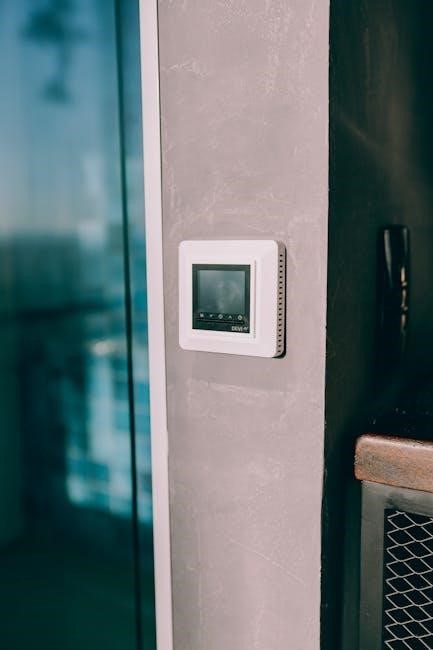
Delta Controls thermostats require secure mounting for accurate temperature sensing and reliable operation. Select a location away from direct sunlight, drafts, and heat-generating appliances. Use the provided mounting plate as a template to mark screw holes on the wall.

Ensure the surface is level before attaching the plate with appropriate screws. Carefully connect the wiring before snapping the thermostat onto the mounting plate. Verify a snug fit and proper alignment. Avoid excessive force during mounting to prevent damage to the unit or wall surface.

Initial Power-Up and Configuration

Upon initial power-up, the Delta Controls thermostat will initiate a self-test sequence. Allow this process to complete before proceeding. Access the configuration menu using the designated buttons on the user interface. Set the correct date and time, ensuring accuracy for scheduling functions.

Configure network settings, including BACnet communication parameters, if connecting to a building automation system. Define the system type (heating, cooling, or heat pump) and configure temperature scales (Celsius or Fahrenheit). Save all settings before exiting the configuration mode.

User Interface Overview

Delta Controls thermostats feature intuitive displays with symbols indicating system status. Navigation is menu-driven, allowing easy adjustment of temperature and scheduling preferences.

Display Symbols and Indicators

Delta Controls thermostats utilize a comprehensive system of display symbols to communicate vital information at a glance. A flame icon signifies active heating, while a snowflake indicates cooling is engaged. Fan symbols denote fan operation modes – auto, on, or circulate.

A Wi-Fi symbol confirms network connectivity, crucial for remote access and building automation system integration. Error codes, displayed as alphanumeric sequences, signal potential issues requiring attention. Battery indicators, where applicable, show remaining power levels. Understanding these symbols empowers users to quickly assess system status and troubleshoot minor concerns without extensive manual review.

Navigating the Menu System

Delta Controls thermostats feature an intuitive menu system accessed via dedicated buttons – typically ‘Menu’, ‘Up’, ‘Down’, and ‘Enter’ or ‘Select’. Pressing ‘Menu’ initiates the main menu, presenting options like ‘Schedule’, ‘Settings’, ‘Information’, and ‘Network’.

Use ‘Up’ and ‘Down’ to scroll through options, and ‘Enter’ to select. Submenus are navigated similarly. The ‘Back’ or ‘Escape’ button returns to the previous screen. Familiarizing yourself with this structure allows for efficient customization of temperature settings, scheduling preferences, and advanced configurations, optimizing comfort and energy savings.

Adjusting Temperature Settings

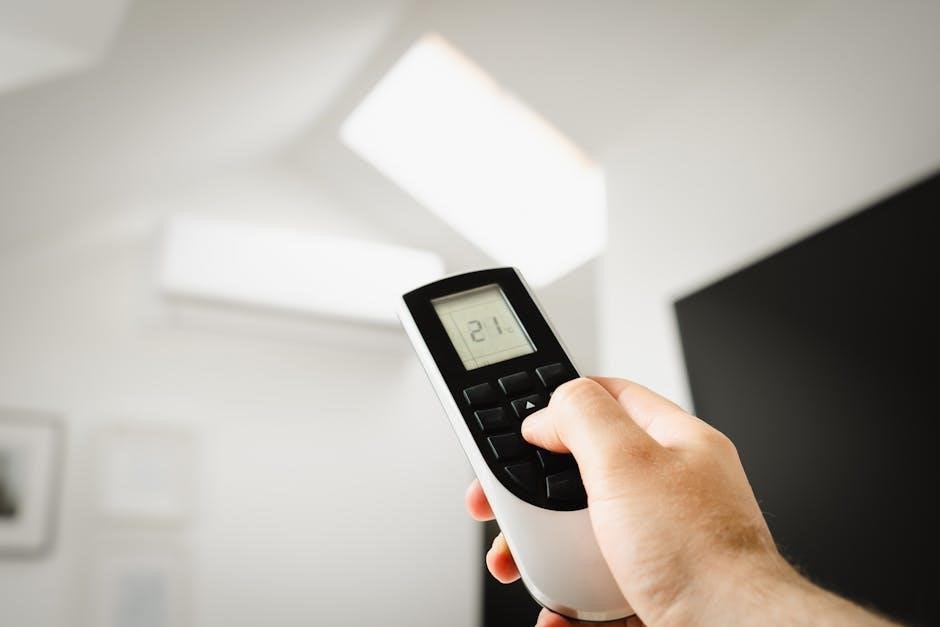
Delta Controls thermostats allow precise temperature adjustments through the menu system or directly via dedicated buttons, if equipped. Within the ‘Temperature’ or ‘Setpoint’ menu, use the ‘Up’ and ‘Down’ arrows to increase or decrease the desired temperature.

The display clearly shows the current setpoint and the actual room temperature. Some models offer ‘Hold’ functionality, maintaining a specific temperature indefinitely, overriding scheduled programs. Remember to confirm changes by pressing ‘Enter’ or ‘Select’ to ensure the new setting is applied.

Programming Schedules

Delta Controls thermostats enable customized heating/cooling schedules for optimal comfort and energy savings. Users can define time-based temperature setpoints easily.

Creating Custom Schedules

Delta Controls thermostats empower users to design personalized comfort profiles through custom scheduling. Access the programming menu via the thermostat’s interface, then define unique setpoints for different times and days. You can establish separate schedules for weekdays versus weekends, or even create individual schedules for each day of the week.

Consider occupancy patterns when setting temperatures – lower settings during unoccupied hours maximize energy efficiency. The system supports multiple schedule periods per day, allowing for granular control. Save your customized schedule to activate it, ensuring consistent and automated temperature management.

Setting Time and Date

Accurate time and date settings are crucial for proper schedule operation within your Delta Controls thermostat. Navigate to the settings menu, typically accessible through the thermostat’s display interface. Locate the “Time & Date” option and select it. Use the navigation buttons to adjust the current year, month, day, hour, and minute.

Ensure the correct time zone is selected for your location. Saving these settings synchronizes the thermostat’s internal clock, enabling automated scheduling and accurate time-stamping of events. Verify the settings after saving to confirm accuracy.

Holiday and Vacation Modes

Delta Controls thermostats offer convenient Holiday and Vacation modes for energy savings during extended absences. These modes override programmed schedules, maintaining a pre-defined setback temperature. Access these options through the thermostat’s menu system, typically under “Scheduling” or “System Settings.”

Specify the start and end dates for your absence. Choose a comfortable, yet energy-efficient, setback temperature. Upon your return, the thermostat automatically resumes the regular programmed schedule, ensuring optimal comfort and efficiency.

Network Connectivity

Delta Controls thermostats utilize BACnet communication protocols for seamless integration into building automation systems, enabling remote monitoring and control capabilities.

BACnet Communication Protocols

Delta Controls thermostats leverage the BACnet (Building Automation and Control Networks) protocol, a widely adopted standard for building automation systems. This ensures interoperability with a diverse range of devices and controllers. The eZNTW model specifically supports various BACnet services, including reading and writing object properties, alarming, and trending.

Successful BACnet communication requires proper network configuration, including IP addressing, subnet masks, and gateway settings. Understanding BACnet object types and their associated properties is crucial for effective integration. Troubleshooting network issues often involves verifying device discovery, checking communication logs, and confirming network connectivity.

Connecting to a Building Automation System

Integrating Delta Controls thermostats into a Building Automation System (BAS) unlocks advanced control and monitoring capabilities. Utilizing BACnet, the eZNTW seamlessly communicates with central controllers, enabling remote temperature adjustments, scheduling, and energy management. Proper network configuration is paramount, ensuring the thermostat is discoverable and accessible within the BAS.

Configuration typically involves mapping thermostat points (temperature, setpoint, status) to corresponding BAS variables. Secure communication protocols and authentication methods should be implemented to protect system integrity. Successful integration enhances building efficiency and provides valuable data for performance analysis.

Troubleshooting Network Issues

Network connectivity problems with Delta Controls thermostats often stem from BACnet communication failures. Verify physical layer connections – cabling, termination resistors – and confirm the thermostat’s IP address is correctly configured and doesn’t conflict with other devices. Utilize network diagnostic tools to ping the thermostat and check for packet loss.

If issues persist, examine the BAS configuration for incorrect mappings or communication settings. Firewall restrictions or network segmentation can also impede communication. Consulting the Delta Controls documentation and support resources is crucial for resolving complex network challenges.

Advanced Settings

Delta Controls thermostats offer customizable PID control, filter cycling, and sensor calibration options for optimized performance and tailored building automation solutions.

PID Control Parameters

Delta Controls thermostats utilize Proportional-Integral-Derivative (PID) control for precise temperature regulation. Adjusting these parameters – Proportional Gain (Kp), Integral Time (Ti), and Derivative Gain (Td) – allows fine-tuning of system responsiveness and stability.

Higher Kp values increase responsiveness but can cause oscillation. Decreasing Ti shortens the integral action, speeding up correction, while increasing Td anticipates future errors. Careful calibration, considering building characteristics and HVAC system dynamics, is crucial for optimal performance and energy efficiency. Incorrect settings can lead to temperature fluctuations or instability.

Filter Cycling and Maintenance Reminders

Delta Controls thermostats can be programmed to cycle fan operation, even during heating or cooling inactivity, to improve indoor air quality by filtering air continuously. This feature minimizes dust and allergen buildup.

The system also provides configurable maintenance reminders for filter replacement, ensuring optimal HVAC system performance and longevity. Users can set reminder intervals based on filter type and usage. Ignoring these reminders can reduce efficiency and potentially damage equipment, increasing energy costs and repair needs.

Sensor Calibration

Delta Controls thermostats utilize precise temperature sensors, but periodic calibration may be necessary to maintain accuracy. The user manual details procedures for verifying sensor readings against a known standard.

Calibration adjustments are accessible through the advanced settings menu, allowing technicians to fine-tune temperature measurements. Proper calibration ensures accurate temperature control, optimizing comfort and energy efficiency. Incorrectly calibrated sensors can lead to system inefficiencies and inaccurate temperature reporting within the BACnet network.

Troubleshooting Common Issues

Delta Controls thermostats may experience power failures, incorrect readings, or communication errors. Consult the user manual for diagnostic steps and solutions.

Thermostat Not Powering On

If your Delta Controls thermostat fails to power on, begin by verifying the power source. Ensure the wiring connections are secure and correspond correctly to the system’s wiring diagram. Check the circuit breaker or fuse associated with the thermostat’s power supply; a tripped breaker or blown fuse will prevent operation.

Confirm that the thermostat is receiving the appropriate voltage. If using batteries (if applicable), replace them with fresh ones. Inspect the wiring for any damage or shorts. If the issue persists, consult a qualified HVAC technician or Delta Controls technical support for further assistance.

Incorrect Temperature Readings

If your Delta Controls thermostat displays inaccurate temperature readings, first check for obstructions near the sensor. Ensure furniture, curtains, or other objects aren’t affecting airflow or directly exposing the sensor to sunlight or heat sources. Verify the thermostat’s location isn’t in a drafty area.

Attempt a sensor calibration within the advanced settings menu. If the problem continues, consider potential interference from nearby electronic devices. Contact Delta Controls support if calibration doesn’t resolve the issue, as a faulty sensor may require replacement.

Communication Errors

Experiencing communication errors with your Delta Controls thermostat? First, verify the physical network connections – ensure all wiring is secure and correct, particularly regarding BACnet protocols. Check the building automation system (BAS) for network conflicts or IP address issues. Confirm the thermostat’s network settings match the BAS configuration.

Restart both the thermostat and the BAS. If problems persist, consult the network troubleshooting section of the manual or contact Delta Controls technical support for assistance with network diagnostics.

Maintenance and Care

Regular cleaning with a soft cloth ensures optimal performance. Check for necessary software updates via the Delta Controls website to maintain functionality.

Cleaning the Thermostat

Maintaining a clean thermostat is crucial for accurate readings and longevity. Before cleaning, always ensure the system is powered off or set to the “off” position to prevent accidental adjustments or electrical hazards. Use a soft, dry cloth to gently wipe the thermostat’s surface, removing dust and debris.

Avoid using abrasive cleaners, solvents, or excessive moisture, as these can damage the display or internal components. For stubborn marks, lightly dampen the cloth with water, ensuring it’s wrung out thoroughly. Never spray liquids directly onto the thermostat. Regular cleaning, approximately every three months, will help keep your Delta Controls thermostat functioning optimally.

Battery Replacement (if applicable)

Some Delta Controls thermostats utilize batteries as a backup power source or for specific functionalities. If your model requires batteries, a low battery indicator will appear on the display. To replace, carefully open the battery compartment, typically located on the back or side of the unit.

Note the battery type required (usually AA or AAA) and replace with fresh batteries of the same type. Ensure correct polarity (+ and -) during installation. After replacement, the thermostat should automatically resume normal operation. Dispose of old batteries responsibly, following local regulations.

Software Updates

Delta Controls regularly releases software updates to improve thermostat performance, add features, and enhance security. These updates are typically delivered via the connected BACnet network or through a direct connection to a computer. Check the Delta Controls website for the latest available updates and instructions.

Before updating, it’s crucial to back up your current configuration settings. Follow the on-screen prompts carefully during the update process, and avoid interrupting power to the thermostat. A successful update will optimize your system and ensure compatibility.

Delta Controls and Freebox Delta Integration (Potential)

Delta Controls thermostats may integrate with Freebox Delta, offering remote access and control via home automation systems, enhancing convenience and efficiency.

Exploring Compatibility with Freebox Delta

Investigating the potential synergy between Delta Controls thermostats and the Freebox Delta presents exciting possibilities for enhanced home automation. Current discussions suggest users are seeking ways to leverage the Freebox Delta’s capabilities, like its server and network features, to control and monitor their heating and cooling systems more effectively.

Specifically, integrating Delta Controls thermostats could allow for remote temperature adjustments, scheduling, and energy usage monitoring directly through the Freebox Delta interface. However, compatibility relies on establishing seamless communication protocols, potentially utilizing BACnet or other integration methods. Further research and development are needed to fully unlock this potential.

Potential for Remote Access and Control

Integrating Delta Controls thermostats with a system like Freebox Delta unlocks significant remote access and control capabilities. Users could adjust temperature settings, create custom schedules, and monitor energy consumption from anywhere with an internet connection. This is particularly valuable for vacation homes or ensuring comfort upon arrival.

The Freebox Delta’s network connectivity and potential for custom domain names (.freeboxos.fr) could facilitate secure remote access. However, successful implementation requires robust network security and a user-friendly interface for managing thermostat settings remotely, potentially through a dedicated mobile application or web portal.

Considerations for Home Automation Systems

Integrating Delta Controls thermostats into broader home automation ecosystems demands careful consideration. Compatibility with protocols beyond BACnet, like Zigbee or Z-Wave, may require additional gateways or bridges. Ensuring seamless interaction with other smart home devices – lighting, security systems, and voice assistants – is crucial for a unified experience.

The Freebox Delta, with its processing power and storage (DDR4, 2To+), could potentially act as a central hub. However, stability and reliability are paramount; reported issues with the Freebox Ultra necessitate thorough testing before relying on it for critical climate control functions.

Sigma-Delta Modulation in Thermostat Operation

Sigma-Delta DACs and ADCs enhance precision in Delta Controls thermostats by converting analog signals with high resolution and reduced noise, improving accuracy.

How Sigma-Delta DACs and ADCs are Used

Delta Controls thermostats utilize Sigma-Delta Analog-to-Digital Converters (ADCs) to precisely measure temperature from sensors, converting analog readings into digital values for processing. Conversely, Sigma-Delta Digital-to-Analog Converters (DACs) translate digital control signals into analog outputs, accurately adjusting heating or cooling actuators.

These converters employ oversampling and noise shaping techniques, pushing quantization noise to higher frequencies where it’s easily filtered. This results in higher resolution and improved signal-to-noise ratio, crucial for maintaining stable and accurate temperature control within building automation systems. The modulation process ensures reliable performance and energy efficiency.

Benefits of Sigma-Delta Technology

Sigma-Delta technology within Delta Controls thermostats delivers exceptional linearity and accuracy in temperature sensing and control. Its inherent noise shaping capabilities minimize quantization errors, resulting in precise and stable heating/cooling. This leads to improved energy efficiency and occupant comfort.

Furthermore, the simplicity of the modulator design allows for easier calibration and reduces the impact of component variations. The technology’s robustness ensures reliable operation over a wide temperature range, contributing to the longevity and performance of the thermostat system.

Delta-V and Thermostat Control

Delta-V, representing temperature differences, is crucial for efficient heating and cooling systems managed by Delta Controls thermostats, optimizing system performance.

Relationship to Heating and Cooling Systems

Delta Controls thermostats act as intelligent interfaces within broader HVAC systems. They receive temperature data, compare it to setpoints, and modulate heating or cooling outputs accordingly. This precise control, often utilizing PID control, ensures consistent comfort and minimizes energy waste.

The thermostats communicate with boilers, chillers, and air handling units, adjusting dampers and valves to maintain desired conditions. Integration with systems like Delta-V allows for optimized performance, considering factors like building load and outdoor temperature. Proper configuration is key to maximizing efficiency and responsiveness within the entire HVAC infrastructure.

Impact on System Efficiency

Delta Controls thermostats significantly boost HVAC system efficiency through precise temperature regulation and intelligent scheduling. Features like filter cycling reminders and optimized PID control parameters minimize energy consumption. Network connectivity via BACnet enables centralized monitoring and adjustments, further refining performance.

By preventing temperature swings and adapting to occupancy patterns, these thermostats reduce unnecessary heating or cooling. Integration with building automation systems allows for holistic energy management, optimizing overall building performance and lowering operational costs. This contributes to a more sustainable and cost-effective environment.

Resources and Support

Delta Controls provides extensive online documentation and a dedicated technical support team. Access manuals, FAQs, and contact information via their official website for assistance.

Delta Controls Website and Documentation

Delta Controls’ official website serves as a central hub for comprehensive resources related to their thermostats, including detailed user manuals, specification sheets, and application notes. Users can navigate to the support section to find downloadable documents specific to the eZNTW model and other enteliZONE compatible devices.

The documentation covers installation procedures, wiring diagrams, network configuration, troubleshooting guides, and advanced settings explanations. Furthermore, the website features a knowledge base with frequently asked questions and helpful articles addressing common issues. Registered users often gain access to exclusive content and software updates, ensuring optimal thermostat performance and integration within building automation systems.

Contacting Technical Support

Delta Controls provides multiple avenues for accessing technical support regarding their thermostats and related systems. Users can initiate contact through the company’s official website, utilizing a dedicated support request form for detailed inquiries. Alternatively, direct phone support is available during standard business hours, connecting users with knowledgeable technicians.

Email support offers another convenient option, allowing for asynchronous communication and detailed issue descriptions. When contacting support, having the thermostat model number, serial number, and a clear description of the problem is crucial for efficient resolution. Accessing the online documentation beforehand can also expedite the troubleshooting process.

stihl fs45 parts manual pdf

Stihl FS45 Parts Manual PDF: A Comprehensive Guide

Navigating the intricacies of your Stihl FS45 requires a detailed parts manual, often available as a PDF․ Accessing diagrams and part numbers simplifies maintenance and repair processes․

The Stihl FS45 is a popular, lightweight gasoline-powered string trimmer, widely used by homeowners and landscaping professionals alike․ Known for its reliability and ease of use, maintaining this tool requires understanding its components and having access to accurate information․ A crucial resource for any FS45 owner is the parts manual, often found in PDF format․

This manual provides detailed exploded view diagrams, illustrating how each part fits together, and lists corresponding part numbers․ Whether you’re performing routine maintenance, like replacing a string trimmer head, or tackling more complex repairs, such as carburetor adjustments, the FS45 parts manual is indispensable․ It ensures you order the correct replacement parts, streamlining the repair process and maximizing the lifespan of your trimmer․

Understanding the Importance of a Parts Manual

A Stihl FS45 parts manual is far more than just a list of components; it’s a vital tool for successful maintenance and repair․ Without it, identifying the correct replacement parts becomes a frustrating guessing game․ The manual’s exploded view diagrams visually demonstrate how everything assembles, preventing errors during reassembly․

Accurate part numbers are essential for ordering replacements, ensuring compatibility and avoiding costly mistakes․ Furthermore, the manual often includes torque specifications, crucial for proper tightening and preventing damage․ Ultimately, a parts manual empowers owners to perform repairs confidently, saving time and money compared to professional servicing․

Locating the Stihl FS45 Parts Manual PDF

Finding your Stihl FS45 manual PDF involves checking the official Stihl website or exploring reliable third-party databases for diagrams and parts lists․

Official Stihl Website Resources

Stihl’s official website is the primary source for authentic FS45 parts manuals in PDF format․ Navigating to the support section allows users to search for documentation using the model number – FS45․ Typically, you can find detailed exploded view diagrams, comprehensive parts lists, and even interactive resources․

Registration may be required to access certain documents, ensuring you receive the most up-to-date information․ Stihl often provides manuals for various production years, so verifying the correct version for your specific trimmer is crucial․ Downloading directly from Stihl guarantees a legitimate and accurate resource for all your parts identification and repair needs, avoiding potential inaccuracies found elsewhere․

Third-Party Online Manual Databases

Numerous online databases compile manuals for various equipment, including the Stihl FS45․ These platforms often offer a convenient alternative when direct access from the official Stihl website is limited․ However, it’s vital to exercise caution, as the accuracy and completeness of these manuals can vary significantly․

Popular sites may include owner’s manuals, repair guides, and parts lists, sometimes offering downloadable PDF versions․ Always cross-reference information with official Stihl resources when possible to ensure reliability․ Be wary of sites requesting excessive personal information or displaying suspicious advertisements before granting access to the manual․

Potential Costs Associated with Manual Access

While many resources offer the Stihl FS45 parts manual PDF free of charge, some avenues may incur costs․ Official Stihl dealers might charge a fee for a printed copy, or for accessing detailed digital versions through their service portals․ Third-party websites, while often providing free access, sometimes operate on a subscription model for comprehensive databases․

Additionally, purchasing a physical manual through online retailers like eBay or Amazon will involve the cost of the manual itself, plus shipping fees․ Beware of websites promising “free” manuals that redirect to paid services or require registration with questionable terms․

Key Components and Their Parts

The Stihl FS45 comprises essential systems: engine, cutting head, and controls․ Detailed parts lists, found in the manual, cover each component for effective repairs․

Engine Components

The engine is the heart of the Stihl FS45, and its components require careful attention during maintenance․ A comprehensive parts manual PDF details every aspect, from the cylinder and piston assembly to the intricacies of the carburetor and fuel system․ Understanding these parts is crucial for diagnosing issues like starting problems or fuel leaks․

Furthermore, the ignition system parts – spark plug, ignition coil – are clearly illustrated with corresponding part numbers․ Accessing exploded view diagrams within the manual allows for easy identification and proper reassembly, ensuring optimal engine performance and longevity․ Genuine Stihl parts are recommended for reliable operation․

Cylinder and Piston Assembly

The Stihl FS45’s cylinder and piston assembly are critical for engine compression and power․ A detailed parts manual PDF provides exploded views showcasing each component – cylinder, piston, connecting rod, and piston rings – with precise part numbers for easy identification․ Proper reassembly requires understanding torque specifications, also found within the manual․

Wear and tear on these parts can lead to reduced performance or engine failure․ The manual aids in diagnosing issues like piston scuffing or cylinder damage․ Using genuine Stihl replacement parts ensures compatibility and maintains the engine’s original performance characteristics, extending its lifespan․

Carburetor and Fuel System

The Stihl FS45 carburetor and fuel system, detailed in the parts manual PDF, regulate the air-fuel mixture for optimal engine operation․ Exploded diagrams illustrate components like the carburetor itself, fuel tank, fuel lines, and fuel filter, each with a unique part number․ Troubleshooting fuel-related issues, such as leaks or starting problems, becomes easier with this visual guide․

The manual highlights proper cleaning and maintenance procedures for the carburetor, including jet cleaning and diaphragm replacement․ Using the correct replacement parts, as identified in the PDF, is crucial for maintaining engine performance and preventing further damage․

Ignition System Parts

The Stihl FS45 ignition system, comprehensively covered in the parts manual PDF, is vital for starting and running the engine․ Detailed diagrams showcase components like the ignition coil, spark plug, and potentially the magneto․ Each part is assigned a specific number for accurate identification when ordering replacements․

The manual aids in diagnosing ignition-related issues, such as a no-spark condition․ Proper maintenance, including spark plug replacement and coil testing, is outlined․ Utilizing genuine Stihl parts, as referenced in the PDF, ensures reliable ignition and optimal engine performance, preventing potential malfunctions․

Cutting Head and Drive System

The Stihl FS45 parts manual PDF meticulously details the cutting head and drive system․ Exploded views illustrate various string trimmer head options, including auto-feed and bump-feed models, with corresponding part numbers; Crucially, the manual diagrams the drive shaft and gearbox assembly, essential for power transfer․

For models accepting blades, adaptor parts are clearly shown․ Troubleshooting rotation issues is simplified with diagrams pinpointing potential failure points․ The PDF assists in identifying worn or damaged components, ensuring efficient grass and weed trimming; Genuine parts, as highlighted, maintain optimal cutting performance․

String Trimmer Head Options

The Stihl FS45 parts manual PDF comprehensively showcases available string trimmer head options․ Auto-feed heads automatically advance the trimming line, while bump-feed heads require manual bumping to release more line․ Detailed diagrams illustrate each head’s internal components – spools, springs, and retaining features․

Part numbers are clearly labeled for easy identification and ordering of replacements․ The manual aids in understanding the assembly and disassembly of each head type․ Choosing the correct head ensures optimal trimming performance and line management, extending the lifespan of your FS45․

Drive Shaft and Gearbox

The Stihl FS45 parts manual PDF provides detailed breakdowns of the drive shaft and gearbox assembly․ Exploded views clearly illustrate the arrangement of components – including the drive shaft itself, gearbox housing, bearings, and seals․ Specific part numbers are assigned to each element, facilitating accurate replacement during repairs․

The manual highlights proper lubrication points and torque specifications for gearbox maintenance․ Understanding this system is crucial for diagnosing issues like power loss or unusual noises․ Diagrams assist in correctly reassembling the gearbox, ensuring smooth and efficient power transfer to the cutting head․

Blade Adaptors (if applicable)

The Stihl FS45 parts manual PDF details blade adaptors if your model is configured for blade use, rather than solely string trimming․ These adaptors connect the cutting blade to the drive shaft, requiring precise fit and secure fastening․ The manual illustrates various adaptor types and their corresponding part numbers․

Crucially, it emphasizes using only Stihl-approved blade adaptors to maintain safety and prevent damage to the gearbox․ Diagrams show correct installation procedures, including washer and nut placement, alongside specified torque values․ Proper installation ensures blade stability and minimizes vibration during operation․

Handle and Control System

The Stihl FS45 parts manual PDF provides detailed breakdowns of the handle and control system components․ This includes the handlebar assembly, throttle control, and the anti-vibration system, all vital for user comfort and operational precision․ Exploded views clearly illustrate the arrangement of grips, levers, and cables․

Part numbers are listed for each element, from throttle cables to handlebar clamps, facilitating accurate replacement․ The manual highlights the importance of a functioning anti-vibration system for reducing fatigue during extended use․ Proper adjustment of the throttle control is also covered, ensuring responsive operation․

Throttle Control and Cable

The Stihl FS45 parts manual PDF dedicates specific sections to the throttle control and its associated cable․ Detailed diagrams showcase the assembly, including the throttle trigger, lock button, and return spring, alongside the cable’s routing․ Part numbers for each component – throttle lever, cable housing, and inner cable – are clearly identified․

The manual emphasizes the importance of a smoothly functioning throttle for safe operation․ It provides guidance on cable adjustment and replacement, ensuring responsive control․ Troubleshooting tips address common issues like a sticky throttle or a frayed cable, promoting efficient repairs․

Anti-Vibration System

The Stihl FS45 parts manual PDF illustrates the anti-vibration system, crucial for operator comfort and reducing fatigue during prolonged use․ Exploded views detail the rubber dampers and mounting components that isolate engine vibrations from the handles․ Specific part numbers are assigned to each damper, mounting plate, and associated hardware․

The manual highlights the importance of maintaining the integrity of this system․ Instructions cover inspecting dampers for wear and tear, and replacing them when necessary․ Proper installation ensures optimal vibration reduction, enhancing user experience and minimizing strain․

Handlebar Assembly

The Stihl FS45 parts manual PDF provides detailed diagrams of the handlebar assembly, showcasing each component’s location and part number․ It includes illustrations of the loop handle, wrap-around handle, throttle lever, and associated mounting hardware․ Users can easily identify parts for replacement or repair, ensuring proper functionality․

The manual outlines the correct assembly procedure, emphasizing proper torque specifications for all fasteners․ It details how to adjust the handle position for optimal comfort and control․ Maintaining a secure handlebar assembly is vital for safe and efficient operation of the trimmer․

Troubleshooting Common Issues with Parts Replacement

A Stihl FS45 parts manual PDF aids in diagnosing issues; incorrect parts or improper installation can cause starting, fuel, or rotation problems․

Engine Not Starting

If your Stihl FS45 engine fails to start, a parts manual PDF becomes invaluable․ Consult the diagrams to verify the correct carburetor and ignition system parts․ Check the fuel system – tank cap, hoses, and fuel pump – for leaks or blockages, referencing the manual’s exploded views․ Ensure the spark plug is clean and properly gapped, using the manual’s specifications․ A faulty cylinder or piston assembly, identifiable through the manual, can also prevent ignition․ Proper troubleshooting, guided by the PDF, minimizes guesswork and ensures accurate parts replacement, restoring engine functionality․

Cutting Head Not Rotating

When the Stihl FS45’s cutting head doesn’t rotate, the parts manual PDF is crucial for diagnosis․ Examine the drive shaft and gearbox using the exploded view diagrams to identify potential damage or wear․ Verify the string trimmer head is correctly assembled and the chosen option is compatible, as detailed in the manual․ Inspect blade adaptors, if used, for proper installation․ A broken or worn drive component, pinpointed with part numbers from the PDF, is often the culprit․ Accurate parts replacement, guided by the manual, restores cutting performance․

Fuel Leaks and Carburetor Problems

Addressing fuel leaks or carburetor issues on your Stihl FS45 demands the precision offered by a parts manual PDF․ Utilize the exploded views to locate fuel tank components, hose connections, and the manual fuel pump․ Identify the correct replacement parts using the provided part numbers․ The manual details carburetor disassembly and cleaning procedures․ Inspect for damaged diaphragms or clogged jets․ Proper fuel system maintenance, guided by torque specifications in the PDF, prevents leaks and ensures optimal engine performance, restoring reliable operation․

Using Exploded View Diagrams

Exploded views within the Stihl FS45 parts manual PDF visually detail assembly, aiding in part identification and understanding the correct assembly order for repairs․

Identifying Part Numbers

Accurately identifying Stihl FS45 part numbers is crucial for ordering the correct replacements․ The parts manual PDF provides exploded view diagrams where each component is labeled with a unique identifier․ These numbers are typically located adjacent to the part in the diagram, allowing for precise matching when sourcing spares․

Referencing the manual ensures compatibility, preventing incorrect parts orders․ Online retailers and authorized Stihl dealers utilize these numbers for quick and accurate fulfillment․ Double-checking the part number against the manual before purchase minimizes errors and ensures a successful repair․ Genuine Stihl parts are easily identified using this system․

Understanding Assembly Order

The Stihl FS45 parts manual PDF’s exploded view diagrams aren’t just for identifying parts; they illustrate the correct assembly sequence․ Following this order is vital for proper functionality and preventing damage during reassembly․ The diagrams show how components interact and the order in which they should be installed․

Incorrect assembly can lead to malfunctions or safety hazards․ The manual often includes notes regarding specific assembly steps, like applying grease or tightening fasteners to specified torque specifications․ Carefully studying the diagrams before starting ensures a smooth and successful repair process, maximizing the trimmer’s lifespan․

Torque Specifications

The Stihl FS45 parts manual PDF provides crucial torque specifications for every fastener․ Applying the correct torque is paramount; under-tightening can cause parts to loosen and fail, while over-tightening risks stripping threads or damaging components․ These specifications are usually listed alongside the exploded view diagrams, often in Newton-meters (Nm) or inch-pounds (in-lbs)․

Using a torque wrench is highly recommended to ensure accuracy․ Adhering to these values guarantees a secure and reliable assembly, preventing premature wear and maintaining the trimmer’s performance․ Ignoring torque specs can void warranties and compromise safety, so always consult the manual․

Genuine vs․ Aftermarket Parts

Choosing between genuine Stihl parts and aftermarket alternatives impacts performance and longevity․ Genuine parts ensure compatibility, while aftermarket options may offer cost savings․

Benefits of Genuine Stihl Parts

Opting for genuine Stihl parts for your FS45 delivers unparalleled reliability and performance․ These components are meticulously engineered to meet Stihl’s exacting standards, ensuring a precise fit and optimal function within the trimmer’s system․ Using authentic parts safeguards against potential damage caused by incompatibility, extending the lifespan of your equipment․

Furthermore, genuine Stihl parts maintain the manufacturer’s warranty, providing peace of mind․ They are constructed from high-quality materials, designed to withstand the rigors of professional use․ Investing in genuine components guarantees consistent cutting power and reduces the likelihood of unexpected breakdowns, ultimately saving time and money․

Advantages of Aftermarket Alternatives

Aftermarket parts for the Stihl FS45 often present a cost-effective solution for repairs and maintenance․ These alternatives can be significantly cheaper than genuine Stihl components, appealing to budget-conscious users․ A wider availability is another benefit, as aftermarket parts are frequently stocked by numerous retailers, offering greater convenience․

However, it’s crucial to research thoroughly, as quality can vary substantially․ Some aftermarket manufacturers prioritize affordability over durability․ Selecting reputable brands can mitigate risks, providing acceptable performance․ While potentially saving money upfront, consider long-term value and potential compatibility issues․

Compatibility Considerations

Ensuring compatibility is paramount when using aftermarket parts for your Stihl FS45․ While many are designed as direct replacements, subtle variations can occur․ Always verify the part number against your FS45’s parts manual PDF to confirm a precise fit․ Incorrect parts can lead to improper function, reduced performance, or even damage to the trimmer․

Pay close attention to model variations within the FS45 range, as slight differences may exist․ Cross-referencing with the exploded view diagrams in the manual is highly recommended․ Prioritize parts specifically listed as compatible with your exact FS45 model to avoid frustrating issues;

Safety Precautions When Replacing Parts

Prioritize safety by disconnecting the spark plug and carefully handling fuel during repairs․ Utilize appropriate tools, referencing the manual’s torque specifications for secure assembly․

Disconnecting the Spark Plug

Before commencing any maintenance or parts replacement on your Stihl FS45, absolutely disconnect the spark plug․ This crucial step prevents accidental engine starting, mitigating the risk of serious injury․ Locate the spark plug, typically covered by a protective cap, and carefully remove the cap․

Using a spark plug wrench, turn the plug counterclockwise to detach it from the engine; Ensure the plug wire is pulled away from the plug itself and secured, preventing accidental contact with the engine during your work․ This simple precaution is paramount for a safe repair experience, safeguarding you from potential hazards․

Fuel Handling Safety

When dealing with fuel during Stihl FS45 parts replacement, prioritize safety․ Gasoline is highly flammable and poses significant risks․ Always work in a well-ventilated area, away from open flames, sparks, or heat sources․ Before handling fuel, ensure the engine is completely cool․

Use a fuel container specifically designed for gasoline, and avoid overfilling․ Clean up any spills immediately with absorbent materials․ Never smoke while handling fuel, and wear appropriate gloves to protect your skin․ Proper fuel handling prevents fires and ensures a safe working environment․

Proper Tool Usage

Replacing Stihl FS45 parts demands the correct tools for the job․ Utilizing inappropriate tools can damage components or cause injury․ Always refer to the parts manual for specified tool requirements, including socket sizes and screwdriver types․ Ensure tools are in good working condition, with no worn or damaged parts․

Employ torque wrenches when tightening fasteners to prevent over or under-tightening․ Wear safety glasses to protect your eyes from debris․ Avoid modifying tools or using them for unintended purposes․ Correct tool usage guarantees efficient repairs and prolongs the life of your FS45․

Where to Purchase Stihl FS45 Parts

Genuine Stihl parts are available through authorized dealers and online retailers, while used parts can be sourced from various suppliers for cost savings․

Authorized Stihl Dealers

Locating an authorized Stihl dealer provides several key advantages when sourcing parts for your FS45․ These dealerships stock genuine Stihl components, ensuring optimal performance and compatibility with your trimmer․ Knowledgeable staff can offer expert advice, assisting you in identifying the correct parts based on your model and specific needs․

Furthermore, authorized dealers often provide repair services, should you prefer professional assistance with parts replacement․ While potentially more expensive than aftermarket options or used parts, genuine Stihl parts from authorized dealers guarantee quality and adherence to the manufacturer’s specifications, preserving the longevity and reliability of your FS45․ Finding a local dealer is easily done through the Stihl website’s dealer locator tool․

Online Retailers

Numerous online retailers specialize in small engine parts, including those for the Stihl FS45․ These platforms often offer a wider selection and potentially lower prices compared to authorized dealers, but require careful vetting․ Verify the retailer’s reputation and ensure they stock genuine or high-quality aftermarket parts․

Always cross-reference part numbers with your FS45 parts manual PDF to guarantee compatibility․ Shipping costs and return policies should also be considered before making a purchase․ While convenient, online retailers may lack the expert advice available at a local Stihl dealership, so thorough research is crucial for a successful parts acquisition․

Used Parts Sources

Exploring used parts sources can be a cost-effective option for repairing a Stihl FS45, particularly for older models where new parts are scarce or expensive․ Online auction sites and small engine repair forums often feature listings from individuals selling salvaged parts․ However, exercise caution when purchasing used components․

Carefully inspect the condition of any used part before buying, and verify its compatibility with your specific FS45 model using the parts manual PDF․ Consider the potential for hidden wear or damage․ While offering savings, used parts may have a limited lifespan, so weigh the risks against the benefits․

atem mini pro iso manual

ATEM Mini Pro ISO: A Comprehensive Manual & Guide (Updated 02/04/2026)

This guide details the ATEM Mini Pro ISO’s features, setup, and operation, including ISO recording, streaming, and control—beneficial for podcasters.

The ATEM Mini Pro ISO represents a powerful, yet compact, live production switcher designed for streamers, podcasters, and content creators. It’s a significant step up from standard webcams and basic switchers, offering professional-grade features in a portable form factor. This manual will serve as your comprehensive guide to unlocking the full potential of this versatile device.

Unlike simpler models, the “ISO” designation indicates the ability to record each input as an independent stream – crucial for post-production editing and creating multiple content pieces. Reddit discussions highlight its excellent value, often recommending the Extreme version for expanded connectivity. Understanding these capabilities is key to maximizing your workflow. We’ll cover everything from initial setup to advanced features, ensuring a smooth and efficient production experience.

What is the ATEM Mini Pro ISO and Who is it For?

The ATEM Mini Pro ISO is an all-in-one live video production switcher with recording capabilities, designed for users needing professional quality without a complex setup. It allows simultaneous recording of all inputs as individual ISO files, streamlining post-production. This makes it ideal for podcasters wanting to separate audio tracks, or content creators needing flexible editing options.

Specifically, it caters to streamers on platforms like YouTube, Facebook, and Twitch, as well as those utilizing RTMP protocols for custom streaming solutions. Reddit users suggest it’s a “best bang-for-buck” option, though the Extreme version is often recommended for greater input/output flexibility. Ultimately, it’s for anyone seeking a robust, portable, and feature-rich live production tool.

Key Features & Specifications

The ATEM Mini Pro ISO boasts a compact design with four HDMI inputs and a USB-C connection for recording and streaming. It supports up to 1080p60 video resolution and includes a built-in media pool for graphics and titles. A crucial feature is the ability to record up to five independent ISOs – all inputs plus the program output.

Audio capabilities include dedicated microphone inputs that can be split into four separate channels for isolated recording. While the Pro ISO offers two HDMI or SDI outputs, Reddit discussions highlight the Extreme model’s advantage with more output options. Network control via Ethernet enables remote operation and configuration through ATEM Software Control.

Unboxing and Initial Setup

Upon unboxing your ATEM Mini Pro ISO, you’ll find the switcher itself, a power adapter, and a USB-C cable. Begin by connecting the power adapter and verifying the unit powers on. Next, connect the USB-C cable to your computer for initial software recognition and potential driver installation.

Download and install the ATEM Software Control from Blackmagic Design’s website. This software is essential for configuration and control. Ensure your computer meets the minimum system requirements. A stable network connection is recommended for firmware updates and remote operation. Initial setup involves configuring video standards and audio settings within the software.

Connecting Inputs & Outputs

The ATEM Mini Pro ISO offers versatile connectivity options. You can connect cameras and other video sources via HDMI or SDI inputs. Utilize the HDMI output for program feed monitoring or connection to a display. The USB-C port facilitates both video output and direct streaming to platforms like YouTube and Facebook.

For audio, connect microphones using the dedicated XLR inputs, benefiting from channel separation for ISO recording. Consider using a USB capture card with the HDMI output if you need to feed the video into a laptop for additional processing or monitoring. Remember the Extreme ISO model provides more output options.

HDMI vs. SDI Connections: Which to Choose?

Selecting between HDMI and SDI depends on your setup and distance requirements. HDMI is suitable for shorter runs, typically within home studios or smaller venues, and is compatible with most consumer cameras. SDI, however, excels in professional environments, offering greater cable lengths and robust signal transmission, minimizing dropouts.

The ATEM Mini Extreme ISO provides more output ports, including both HDMI and SDI, offering greater flexibility. If you anticipate needing longer cable runs or integrating with professional broadcast equipment, SDI is the preferred choice. For simpler setups, HDMI provides a convenient and cost-effective solution.

Utilizing the USB-C Connections for Recording & Streaming

The ATEM Mini Pro ISO’s USB-C port facilitates direct recording and streaming to computers. It functions as a webcam, simplifying integration with software like OBS Studio, Zoom, or Skype. This eliminates the need for capture cards for basic streaming setups.

For higher quality recordings, consider using the USB-C port to connect to a computer for direct capture, bypassing compression. Alternatively, utilize the port for streaming directly to platforms like YouTube, Facebook, or Twitch. Remember, the Extreme ISO model offers dual USB-C connections for simultaneous recording and streaming capabilities.

Software Control & Configuration

Blackmagic Design’s ATEM Software Control panel provides comprehensive control over the Mini Pro ISO. This software allows for remote operation, switching between sources, adjusting audio levels, and configuring recording settings. Network control enables operation from a separate computer connected to the same network, offering flexibility during live productions.

The software mirrors the physical controls of the switcher, but expands functionality with features like macro creation and advanced color correction. Utilizing a dedicated computer for control frees up the switcher for recording and streaming tasks, streamlining your workflow.

ATEM Software Control Panel Overview

The ATEM Software Control panel is logically organized into sections for easy navigation. The ‘Switcher’ tab manages program and preview rows, allowing for cuts, mixes, and transitions. ‘Audio’ provides individual channel control, including gain, EQ, and compression. ‘Media’ handles still store and clip playback, while ‘Color’ offers basic color correction tools.

‘Recording’ configures ISO recording parameters and manages storage. ‘Setup’ adjusts global settings like video standards and network configurations. The panel’s intuitive design facilitates quick adjustments during live broadcasts, maximizing efficiency and creative control.

Network Control & Remote Operation

The ATEM Mini Pro ISO enables remote operation via Ethernet connection. Connecting the ATEM to the same network as a laptop allows control through the ATEM Software Control panel, even without a direct USB connection. This is particularly useful for setups where the switcher is physically distant from the operator.

Network control facilitates adjustments to all switcher settings, including video sources, audio levels, and transitions. Utilizing network control eliminates the need for physical access to the device, streamlining workflows and enabling collaborative broadcasting scenarios.

Recording Capabilities: ISO Recording Explained

The ATEM Mini Pro ISO’s standout feature is its ISO recording capability. This allows simultaneous recording of all input sources as individual files to a USB drive. Essentially, each camera feed, plus the program and preview outputs, are recorded independently.

This provides immense flexibility in post-production, enabling editing with multiple camera angles. ISO recordings are crucial for creating polished content, correcting errors, or repurposing footage. The ability to split the two microphone inputs into four separate channels further enhances audio ISO recording possibilities.

Multi-Camera Recording with ISOs

Leveraging the ATEM Mini Pro ISO’s ISO recording truly shines in multi-camera setups. With multiple cameras connected, each source is recorded independently, offering unparalleled creative control during editing. This eliminates the limitations of traditional recording methods where only the program output is saved.

Imagine a podcast with two camera angles and two distinct microphones; the ISOs capture each feed separately. This allows for dynamic switching between cameras and precise audio adjustments in post-production. Consider upgrading to the Extreme ISO model for increased input and output options, maximizing multi-camera potential.

Managing and Exporting ISO Recordings

After recording, accessing and exporting your ISO files is straightforward. The ATEM Mini Pro ISO stores ISO recordings on a connected USB drive. These files are typically in a format compatible with common video editing software like DaVinci Resolve, Adobe Premiere Pro, or Final Cut Pro.

Organization is key; clearly label your USB drives and recordings. If you encounter issues, consider utilizing a USB capture card to transfer video to a laptop for editing and control via the ATEM’s network interface. Remember, the ISOs represent individual source feeds, allowing for flexible post-production workflows.

Audio Control & Mixing

The ATEM Mini Pro ISO provides robust audio control, crucial for professional-sounding productions. It features dedicated microphone inputs that can be split into four separate channels, effectively creating ISO recordings of each microphone source. This allows for independent audio post-production and mixing.

Utilize the software control panel to adjust levels, apply equalization, and add compression to each audio channel. Careful monitoring and level adjustment are essential to prevent clipping and ensure a clean, balanced sound. Proper audio mixing significantly enhances the overall quality of your live streams and recordings.

Dedicated Microphone Inputs & Channel Separation

The ATEM Mini Pro ISO boasts two dedicated XLR microphone inputs, a significant advantage for podcasting and multi-presenter setups. A key feature is the ability to split these two inputs into four separate, isolated channels within the mixer. This channel separation is vital for ISO recording, allowing you to capture each microphone source independently.

This functionality provides unparalleled flexibility in post-production. You can adjust levels, apply effects, and refine the audio of each speaker individually, resulting in a polished and professional sound. Effectively, you gain an ISO recording of each of the four mics.

Audio Monitoring & Level Adjustment

Precise audio control is crucial for a professional broadcast, and the ATEM Mini Pro ISO delivers. The built-in audio mixer allows for individual level adjustment for each input, including the dedicated microphone channels. Visual audio meters provide real-time feedback, ensuring optimal signal levels and preventing clipping or distortion.

Monitoring options are versatile. You can utilize the built-in headphone jack for direct monitoring, or connect external speakers via the HDMI output. Careful level adjustment, combined with monitoring, guarantees clear and consistent audio throughout your live stream or recording;

Live Streaming Setup & Configuration

The ATEM Mini Pro ISO simplifies live streaming to popular platforms. Direct integration with YouTube, Facebook, and Twitch is available, streamlining the setup process. Simply select your desired platform within the ATEM Software Control panel and enter your stream key.

For greater flexibility, the ATEM Mini Pro ISO supports RTMP protocols, enabling streaming to custom servers or less common platforms. Consider utilizing a wired Ethernet connection for a stable and reliable stream. Alternatively, a USB capture card can route the HDMI output to a laptop for streaming control.

Direct Streaming Platforms (YouTube, Facebook, Twitch)

The ATEM Mini Pro ISO offers seamless direct streaming to major platforms. Within the ATEM Software Control, select your preferred service – YouTube, Facebook, or Twitch – from the streaming destination options. Input your unique stream key, obtained from the platform’s settings, into the designated field.

Ensure your internet connection is stable and sufficient for the desired streaming quality. The ATEM Mini Pro ISO automatically handles encoding and bitrate adjustments. Regularly monitor the stream status within the software to confirm a successful connection and broadcast.

Using RTMP Protocols for Custom Streaming

For streaming to platforms not directly supported, the ATEM Mini Pro ISO utilizes RTMP (Real-Time Messaging Protocol). Access the custom streaming settings within the ATEM Software Control panel. Manually input the RTMP server URL and stream key provided by your chosen platform.

Verify the server address and key accuracy to avoid connection issues. Adjust bitrate and resolution settings to match the platform’s recommendations. RTMP offers flexibility but requires more technical configuration than direct platform integration. Test the connection thoroughly before live broadcasts.

Troubleshooting Common Issues

Encountering problems? Begin by checking all cable connections—ensure they are secure; For audio issues, verify input levels and channel assignments within the audio mixer. If video signal is lost, confirm source power and HDMI/SDI cable integrity.

Consider upgrading to the Extreme ISO for additional ports if experiencing limitations. Utilize the ATEM Software Control for remote diagnostics. A USB capture card can bypass multiview monitor issues. Network connectivity is crucial for remote operation; confirm a stable connection.

Resolving Audio Problems

Audio glitches are common; start by verifying microphone connections and ensuring proper gain staging. The ATEM Mini Pro ISO splits two mic inputs into four separate channels, enabling ISO recording of individual mics. Check the audio mixer within the software control panel for correct channel assignments and levels.

Confirm phantom power is enabled if using condenser microphones. Monitor audio levels closely to avoid clipping or excessive noise. If issues persist, test with different cables and microphones to isolate the problem. A stable network connection is vital for reliable audio transmission.

Addressing Video Signal Loss

Video signal loss can stem from several sources; begin by inspecting all HDMI or SDI cable connections, ensuring they are securely fastened. Consider cable quality – higher-grade cables minimize signal degradation. If using long cable runs, an amplifier might be necessary to boost the signal.

Verify the input source is powered on and outputting a compatible video format. The ATEM Mini Pro ISO supports various resolutions and frame rates; confirm compatibility. As a workaround, utilize a USB capture card connected to a laptop for video input, alongside network control via Ethernet.

ATEM Mini Pro ISO vs. ATEM Mini Extreme ISO: A Comparison

The ATEM Mini Pro ISO is a robust entry point, but the Extreme ISO offers significant advantages for expanding setups. Notably, the Extreme ISO boasts eight inputs versus the Pro ISO’s four, providing greater flexibility. Crucially, it features two HDMI and four SDI outputs, alongside dual USB-C connections—enhancing connectivity options.

For podcasting or multi-camera productions, the Extreme ISO’s expanded I/O is invaluable. Upgrading provides more outputs for monitoring and recording, plus the ability to connect more sources. Consider the Extreme ISO if future growth or complex workflows are anticipated.

Benefits of Upgrading to the Extreme ISO Model

Transitioning to the ATEM Mini Extreme ISO unlocks substantial workflow enhancements. The increased input count—eight versus four—accommodates larger productions and more camera sources. Dual USB-C ports enable simultaneous recording and streaming without compromise, a critical feature for live content creation.

Furthermore, the expanded output options—two HDMI and four SDI—facilitate versatile monitoring and distribution. For those utilizing a laptop for control, bypassing the multiview monitor with a USB capture card is possible. Ultimately, the Extreme ISO provides scalability and professional-grade connectivity.

Advanced Features & Workflows

The ATEM Mini Pro ISO’s power extends beyond basic switching. Utilizing macros allows for complex, automated sequences—ideal for repetitive actions or precise timing during broadcasts. These pre-programmed sequences streamline production, reducing errors and freeing up the operator.

Furthermore, explore advanced audio routing and mixing capabilities for a polished sound. The ability to split the two microphone inputs into four separate channels is particularly useful for podcasting, enabling individual ISO recordings of each mic source. Regular firmware updates ensure continued functionality and access to new features.

Utilizing Macros for Automated Switching

Macros within the ATEM Mini Pro ISO are pre-programmed sequences of actions, automating complex operations with a single button press. These can include transitions, media player control, audio adjustments, and even triggering external devices. Creating macros involves recording a series of commands within the ATEM Software Control panel.

For example, a macro could instantly switch between multiple camera angles, apply a specific video effect, and adjust audio levels—all simultaneously. This is incredibly useful for live events, ensuring consistent and professional results. Experiment with different combinations to streamline your workflow and enhance production value.

Firmware Updates & Support

Blackmagic Design regularly releases firmware updates for the ATEM Mini Pro ISO, improving performance, adding new features, and addressing potential bugs. Staying current with these updates is crucial for optimal operation and access to the latest enhancements. Updates are typically downloaded from the Blackmagic Design website and installed via the ATEM Setup Utility.

Comprehensive support resources are available online, including a detailed user manual, FAQs, and a dedicated support forum. The Blackmagic Design community is also a valuable source of information and troubleshooting assistance. For more complex issues, direct support can be obtained through Blackmagic Design’s support channels.

dixell universal controller manual

Dixell Universal Controller Manual: A Comprehensive Plan

This manual provides a detailed guide to programming Dixell temperature controllers, as demonstrated in resources like YouTube tutorials focusing on digital thermostat setup.

It covers setpoint temperature control, essential for precise temperature management, and offers insights into various controller series.

Dixell universal controllers represent a leading solution in temperature management, widely adopted across refrigeration, heating, and air conditioning applications. These programmable instruments offer precise control and monitoring capabilities, ensuring optimal performance and energy efficiency. Understanding their functionality is crucial for professionals and end-users alike.

The controllers are renowned for their versatility, accommodating a broad range of sensors and actuators. Resources like YouTube tutorials (e.g., Dixell Temperature Controller Program Digital Thermostat) demonstrate the practical application of these controllers, specifically focusing on digital thermostat programming and setpoint temperature adjustments. These controllers aren’t limited to simple on/off control; they support advanced features like defrost cycles, alarm systems, and fan control, all configurable through a user-friendly interface.

Dixell’s commitment to innovation has resulted in a diverse series of controllers, each tailored to specific needs. From basic models to sophisticated units with communication protocols (like Modbus), Dixell provides a solution for virtually any temperature control challenge. Proper installation, configuration, and maintenance are key to maximizing the lifespan and performance of these controllers, and this manual aims to provide comprehensive guidance on all aspects.

Understanding the Dixell Controller Series

Dixell offers a comprehensive range of controller series, each designed to address specific application requirements. The X series, for example, is popular for its versatility and ease of programming, often featured in introductory tutorials like those found on platforms such as YouTube. The XR series builds upon this foundation, adding enhanced features and communication capabilities.

More advanced series, such as the GENIUS series, provide sophisticated control algorithms and extensive parameterization options. These controllers are ideal for complex systems requiring precise temperature management and data logging. Understanding the distinctions between these series is crucial for selecting the appropriate controller for a given application. Key considerations include the number of outputs, sensor compatibility, and communication protocol support.

Each series boasts unique features, from simple on/off control to proportional-integral-derivative (PID) control for optimized performance. Dixell’s documentation and online resources (including video guides demonstrating programming techniques) provide detailed specifications for each model, enabling informed decision-making. Choosing the right series ensures optimal efficiency, reliability, and long-term cost savings.

Key Features and Benefits

Dixell universal controllers offer a wealth of features designed to optimize temperature management across diverse applications. Precise temperature control is paramount, achieved through advanced algorithms and accurate sensor integration. User-friendly programming interfaces, often demonstrated in online tutorials, simplify setup and customization. Defrost cycle management is a core benefit, preventing ice buildup and maintaining efficiency.

Alarm systems provide critical alerts for temperature deviations or equipment malfunctions, ensuring timely intervention. Fan control settings allow for optimized airflow and energy savings. Digital input/output configuration enables seamless integration with external devices and systems. Data logging capabilities facilitate performance monitoring and analysis, aiding in preventative maintenance.

Remote access and control options (depending on the model) enhance convenience and flexibility. These controllers contribute to reduced energy consumption, improved product quality, and increased operational reliability. The versatility of Dixell controllers makes them suitable for refrigeration, heating, and various industrial processes, offering a significant return on investment.

Controller Display and Interface Overview

Dixell universal controllers typically feature a clear, multi-line display providing real-time temperature readings, setpoints, and operational status. The interface generally consists of tactile buttons – often labeled for functions like “Set,” “Menu,” “Up,” and “Down” – enabling intuitive navigation. LED indicators signal active functions such as defrost, alarm, or fan operation.

Display elements commonly include current temperature, desired setpoint, and icons representing active features. The menu structure is hierarchical, allowing access to various parameters and settings. Some models incorporate a backlight for improved visibility in low-light conditions. The display’s responsiveness and clarity are crucial for efficient operation and troubleshooting.

Understanding the display’s symbols and codes is essential for interpreting controller behavior. The interface is designed for ease of use, even for operators with limited technical expertise. Online resources, including video tutorials, often demonstrate navigating the interface and interpreting displayed information, enhancing user understanding.

Basic Navigation and Menu Structure

Dixell controllers employ a hierarchical menu structure accessed via dedicated buttons, typically “Menu” and “Set.” Pressing “Menu” cycles through main menu options, while “Set” confirms selections and enters submenus. The “Up” and “Down” arrows adjust parameter values within menus. Navigation is generally straightforward, though specific steps vary by model.

Common menu sections include setpoint adjustment, defrost settings, alarm configuration, and parameter programming. Within each section, further submenus allow fine-tuning of specific functions. The controller’s display guides users through the menu options, indicating current selections and available parameters.

Understanding the menu logic is crucial for effective controller operation. Online tutorials and manuals often provide step-by-step instructions for navigating the menu structure. Familiarizing yourself with the menu layout streamlines parameter adjustments and troubleshooting. Remember to save changes after making adjustments to ensure they are implemented.

Parameter Programming: General Principles

Parameter programming in Dixell controllers involves adjusting numerical values to customize operation. Accessing parameters requires navigating the menu structure using the “Menu,” “Set,” “Up,” and “Down” buttons. Each parameter has a specific code and range of acceptable values, detailed in the controller’s manual.

Modifying parameters allows tailoring the controller to specific application requirements. Key considerations include temperature setpoints, defrost cycles, alarm thresholds, and fan control settings. Changes should be made cautiously, documenting original values for easy reversion if needed;

Understanding parameter interdependencies is vital; altering one parameter can affect others. Online resources and tutorials demonstrate programming techniques for common applications. Always save changes after adjusting parameters to ensure they are applied. Incorrect parameter settings can lead to suboptimal performance or system malfunctions, so careful attention is essential.

Setting the Temperature Setpoint

Setting the temperature setpoint is a fundamental operation on a Dixell universal controller. Typically, this is achieved by entering the “Set” mode via the controller’s interface, often initiated by pressing the “Set” button. The display will then show the current setpoint temperature, allowing adjustment using the “Up” and “Down” arrow buttons.

The setpoint represents the desired temperature the controller will maintain. It’s crucial to set this accurately based on the application’s requirements – whether it’s refrigeration, heating, or a specific process. Some controllers allow for multiple setpoints, enabling different temperatures for different times or conditions.

Online tutorials demonstrate this process visually, showing the button presses and display changes. After adjusting the setpoint, confirm and save the new value by pressing “Set” again. Verify the setpoint is correctly displayed after saving. Incorrect setpoints can lead to inefficient operation or product spoilage.

Configuring Defrost Cycles

Defrost cycles are essential for refrigeration systems utilizing Dixell controllers, preventing ice buildup on the evaporator coil. Configuration involves setting parameters like defrost frequency, duration, and termination temperature. Accessing these settings typically requires navigating the controller’s menu using the “Set” and arrow buttons.

Defrost frequency determines how often the defrost cycle initiates – options include time-based (e.g., every 24 hours) or demand-based (triggered by frost accumulation). Defrost duration specifies how long the defrost heater operates, while the termination temperature indicates when the cycle ends.

Proper configuration is vital for energy efficiency and system performance. Too frequent defrosts waste energy, while infrequent ones lead to ice buildup and reduced cooling capacity. Online resources often illustrate the menu structure and parameter options. Carefully review the application’s requirements and adjust the parameters accordingly. Always save changes after configuration.

Alarm System Configuration

Dixell controllers feature robust alarm systems to alert users to critical system conditions. Configuration involves defining alarm thresholds and selecting appropriate response actions. Common alarm types include high/low temperature alarms, door open alarms, and sensor failure alarms. Accessing alarm settings is usually done through the controller’s menu, often under a dedicated “Alarm” or “Safety” section.

Each alarm can be individually configured with specific parameters. Alarm thresholds define the temperature or condition that triggers the alarm. Hysteresis prevents rapid alarm cycling. Response actions include audible alarms, relay activation (for remote signaling), and display messages.

Proper alarm configuration is crucial for preventing damage and ensuring product safety. Carefully consider the application’s requirements and set appropriate thresholds. Test the alarm system regularly to verify its functionality. Refer to the manual for detailed information on available alarm options and configuration procedures.

Fan Control Settings

Dixell controllers offer versatile fan control options to optimize airflow and temperature distribution. Configuration allows users to define fan operation based on various parameters, including temperature, defrost cycles, and time. Common fan control modes include continuous operation, periodic operation, and alarm-activated operation.

Fan settings typically include fan speed control, minimum on/off times, and hysteresis settings. Fan speed can often be adjusted to balance airflow with noise levels and energy consumption. Minimum on/off times prevent frequent fan cycling, extending fan life. Hysteresis ensures stable fan operation.

Proper fan control configuration is essential for maintaining consistent temperatures and preventing condensation. Consider the application’s specific requirements and adjust fan settings accordingly. Monitor fan performance to ensure optimal operation. Consult the manual for detailed information on available fan control options and configuration procedures.

Digital Input Configuration

Dixell universal controllers feature digital inputs that enhance functionality and allow for integration with external devices. These inputs can be configured to respond to various signals, such as door switches, level sensors, or remote control systems. Proper configuration is crucial for tailoring the controller to specific application needs.

Digital inputs can be assigned different functions through the controller’s parameter settings. Common functions include alarm activation, defrost initiation, fan control override, and setpoint adjustment. The controller’s manual provides a comprehensive list of available input functions and their corresponding parameters.

When configuring digital inputs, it’s important to consider the input signal type (e.g., normally open or normally closed) and the desired response. Incorrect configuration can lead to unexpected behavior or system malfunctions. Testing the input configuration after setup is recommended to ensure proper operation. Refer to the wiring diagrams for correct connection details.

Digital Output Configuration

Dixell universal controllers utilize digital outputs to control external devices based on programmed parameters and system status. These outputs can activate relays, solenoids, or other components, enabling automated control of refrigeration, heating, or ventilation systems. Careful configuration of these outputs is essential for optimal system performance.

Digital outputs are assigned functions like compressor activation, defrost heater control, fan operation, and alarm signaling. The controller’s parameter menu allows for customization of output behavior, including on/off delays, hysteresis settings, and alarm priorities. Understanding these parameters is key to achieving precise control.

When configuring digital outputs, consider the load requirements of the connected devices and ensure the controller’s output capacity is sufficient. Incorrect configuration or overloading can damage the controller or connected equipment. Always verify wiring connections and test the output functionality after setup. Consult the manual for specific output ratings and limitations.



Advanced Parameter Settings

Dixell universal controllers offer a range of advanced parameter settings designed for experienced users and specialized applications. These settings allow fine-tuning of controller behavior beyond basic temperature control, optimizing performance and efficiency. Accessing these parameters typically requires entering a specific configuration mode.

Advanced settings include parameters for cascade control, proportional-integral-derivative (PID) tuning, and adaptive defrost algorithms. Cascade control enables the use of multiple temperature sensors and controllers for more precise temperature regulation. PID tuning optimizes the controller’s response to temperature changes, minimizing overshoot and oscillation. Adaptive defrost adjusts defrost cycles based on actual frost buildup, reducing energy consumption.

Modifying advanced parameters requires a thorough understanding of control theory and the specific application. Incorrect settings can lead to unstable system operation or reduced efficiency. Always document any changes made to advanced parameters and proceed with caution. Refer to the Dixell manual for detailed explanations and recommended settings.

Understanding Error Codes and Troubleshooting

Dixell universal controllers utilize error codes to signal malfunctions or abnormal operating conditions. These codes are displayed on the controller’s interface, providing valuable diagnostic information. Understanding these codes is crucial for efficient troubleshooting and minimizing downtime. The manual provides a comprehensive list of error codes and their corresponding meanings.

Common error codes indicate sensor failures (e.g., broken wire, short circuit), relay issues, or temperature range violations. For example, an error code related to a temperature sensor suggests a problem with the sensor itself or its wiring. Relay errors may indicate a faulty relay or a problem with the connected load. Troubleshooting typically involves checking wiring connections, testing sensors, and verifying relay operation.

If an error code persists after attempting basic troubleshooting steps, consult the Dixell manual or contact a qualified technician. Attempting repairs without proper knowledge can damage the controller or connected equipment. Always prioritize safety when troubleshooting electrical systems.

Wiring Diagrams and Electrical Connections

Proper wiring is essential for the correct operation and safety of a Dixell universal controller. The manual provides detailed wiring diagrams illustrating the connections for various configurations, including compressors, fans, defrost heaters, and alarms. These diagrams clearly show the terminal assignments and recommended wire gauges.

Electrical connections typically involve connecting the controller to a power supply, temperature sensors, and controlled devices. Ensure the power supply voltage matches the controller’s requirements. Temperature sensors are usually connected to dedicated terminals, and their wiring should be shielded to minimize interference. Relays control the power to compressors, fans, and heaters, and their connections must be secure.

Always disconnect power before making any wiring changes. Follow the wiring diagrams precisely and double-check all connections before restoring power. Incorrect wiring can damage the controller or connected equipment. If unsure about any aspect of the wiring, consult a qualified electrician.

Communication Protocols (e.g., Modbus)

Dixell universal controllers often support various communication protocols, enabling integration with Building Management Systems (BMS) and remote monitoring setups. Modbus is a commonly implemented protocol, allowing data exchange between the controller and a central system. This facilitates remote temperature monitoring, control adjustments, and data logging.

The manual details the Modbus communication settings, including baud rate, parity, and address configuration. Proper configuration is crucial for establishing reliable communication. Other protocols, such as BACnet or Ethernet, may be supported depending on the specific controller model. These protocols offer enhanced connectivity and data transfer capabilities.

Utilizing these communication protocols allows for centralized management of multiple controllers, streamlining operations and improving efficiency. Data logging features, accessible through these protocols, provide valuable insights into temperature trends and system performance. Consult the manual for specific instructions on configuring and utilizing the supported communication protocols.

Data Logging and Monitoring Capabilities

Dixell universal controllers frequently incorporate robust data logging and monitoring features, crucial for performance analysis and troubleshooting. These capabilities allow for the recording of temperature readings, setpoints, and alarm events over time. Logged data can be invaluable for identifying trends, optimizing system efficiency, and diagnosing potential issues.

The manual details how to access and interpret the logged data, often through dedicated software or via communication protocols like Modbus. Data can be downloaded for analysis using spreadsheet programs or specialized data visualization tools. Real-time monitoring features provide current temperature readings and system status at a glance.

Advanced models may offer graphical displays of historical data directly on the controller’s interface. This allows for quick identification of temperature fluctuations and deviations from setpoints. Proper utilization of these features enhances preventative maintenance and ensures optimal system performance. Refer to the manual for specific instructions on data logging configuration and access.

Remote Access and Control Options

Dixell universal controllers increasingly offer remote access and control functionalities, enhancing operational convenience and efficiency. These options typically leverage communication protocols like Modbus, enabling integration with Building Management Systems (BMS) or dedicated remote monitoring platforms. Remote access allows users to monitor temperature readings, adjust setpoints, and acknowledge alarms from a centralized location.

The manual details the necessary configuration steps for establishing remote connectivity, including network settings and communication parameters. Some models support web-based interfaces, providing access through standard web browsers. Mobile applications may also be available, offering convenient control from smartphones or tablets.

Secure remote access is paramount, and the manual outlines best practices for protecting against unauthorized access. Features like password protection and encryption are often implemented. Proper configuration ensures reliable remote operation and facilitates proactive system management. Consult the manual for specific instructions and compatibility information.

Maintenance and Calibration Procedures

Regular maintenance is crucial for ensuring the long-term accuracy and reliability of your Dixell universal controller. The manual emphasizes periodic inspection of wiring connections, verifying secure terminations and checking for any signs of damage or corrosion. Cleaning the controller’s display and enclosure with a soft, dry cloth is also recommended.

Calibration procedures are outlined to maintain temperature sensor accuracy. The manual details how to compare the controller’s readings with a calibrated reference thermometer and adjust parameters accordingly. It’s important to follow these steps carefully, as improper calibration can lead to inaccurate temperature control.

Preventative maintenance schedules are suggested based on the operating environment and application. The manual also addresses troubleshooting common issues and provides guidance on replacing faulty components. Remember to always disconnect power before performing any maintenance or calibration procedures. Refer to the manual for specific model instructions and safety precautions.

Safety Precautions and Guidelines

Prioritizing safety is paramount when installing, operating, and maintaining a Dixell universal controller. The manual strongly advises disconnecting all power sources before performing any wiring or maintenance procedures to prevent electrical shock. Qualified personnel should handle all electrical connections, adhering to local and national electrical codes.

Caution is urged against operating the controller in excessively humid or corrosive environments, as this can damage internal components and create safety hazards. The manual highlights the importance of using appropriately rated fuses and ensuring proper grounding to protect against short circuits.

Never attempt to disassemble or modify the controller beyond the procedures outlined in the manual, as this could compromise its safety features and void the warranty. Regularly inspect wiring for damage and replace any worn or frayed cables. Always follow the manufacturer’s recommendations for temperature limits and operating conditions. Adhering to these guidelines ensures safe and reliable operation.

oticon tv adapter 3.0 manual

Oticon TV Adapter 3.0 Manual: A Comprehensive Guide

This guide provides detailed instructions for setting up and using your Oticon TV Adapter 3.0, ensuring optimal sound quality and a personalized listening experience.

Learn to pair with hearing aids, adjust volume, and troubleshoot common issues for enjoyable TV viewing.

Welcome to enhanced television listening! The Oticon TV Adapter 3.0 is designed to wirelessly transmit audio directly to your Oticon hearing aids, offering a personalized and immersive sound experience. This eliminates the need to crank up the TV volume, allowing others to enjoy their preferred sound levels while you hear clearly.

This adapter is intended for use with TVs and other audio devices, providing a convenient solution for individuals with hearing loss. It’s a simple yet powerful tool to improve your entertainment enjoyment. The adapter allows for independent volume control within your hearing aids, optimizing clarity and reducing background noise.

This introduction will guide you through the setup, pairing, and usage of your new Oticon TV Adapter 3.0, ensuring a seamless transition to a more enjoyable listening experience.

What is the Oticon TV Adapter 3.0?

The Oticon TV Adapter 3.0 is a compact wireless transmitter that bridges the gap between your television or audio device and your Oticon hearing aids. It’s a dedicated device specifically engineered to deliver high-quality audio directly to your ears, bypassing the TV’s speakers.

Essentially, it acts as a personal sound system for your hearing aids. Unlike Bluetooth connections which can be affected by interference, the TV Adapter 3.0 utilizes a stable and reliable connection for consistent audio streaming. This ensures clear dialogue and immersive sound, enhancing your overall TV viewing experience.

It’s designed for easy setup and use, offering a simple solution to improve sound clarity and personalization. The adapter is intended to provide a superior listening experience for Oticon hearing aid users.

Key Features and Benefits

The Oticon TV Adapter 3.0 boasts several key features, including direct sound streaming to your Oticon hearing aids, allowing personalized volume control independent of the TV’s speaker volume. This is ideal for shared living spaces, letting others enjoy their preferred sound level.

Benefits extend to improved speech clarity and a reduction in background noise, enhancing dialogue comprehension. The adapter supports pairing with multiple hearing aids simultaneously, making it perfect for couples or families. It offers a stable and reliable connection, minimizing audio dropouts.

Furthermore, the compact design allows for discreet placement near your TV. Enjoy a more immersive and enjoyable television experience tailored to your individual hearing needs.

Setting Up Your Oticon TV Adapter 3.0

This section details the initial setup process, covering unboxing, connecting the adapter to your TV, and powering it on for first-time use.

Unboxing and Component Overview

Upon opening the box, carefully verify that all components are present. You should find the Oticon TV Adapter 3.0 unit itself, a power supply for operation, and potentially a fiber optic cable – depending on your TV connection needs.

The adapter is a small, discreet device designed for easy placement near your television. Inspect each item for any signs of damage during shipping. The power supply is specifically designed for this adapter; using a different power source could cause malfunction or damage.

Familiarize yourself with the adapter’s ports: a digital optical input, a 3.5mm auxiliary input, and the power connection; Understanding these connections is crucial for successful setup and integration with your existing home entertainment system. Retain the packaging for potential future use or warranty claims.

Connecting to Your TV

To connect the Oticon TV Adapter 3.0 to your television, first locate the digital optical audio output (Toslink) or the 3.5mm audio output on your TV. If using the optical connection, carefully insert one end of the provided fiber optic cable into the TV’s output and the other into the adapter.

For a 3.5mm connection, use a standard audio cable (not always included) to connect the TV’s headphone jack to the adapter’s auxiliary input. Ensure the connection is secure at both ends.

Power on the adapter and verify that the appropriate audio output setting is selected on your TV – typically labeled as ‘Optical’ or ‘External Audio’. This ensures the sound is routed correctly to the adapter for streaming to your Oticon hearing aids.

Powering On and Initial Setup

To power on the Oticon TV Adapter 3.0, connect the provided USB cable to the adapter and a USB power source – a TV’s USB port or a USB wall adapter works well. The indicator light will illuminate, signaling power.

During initial setup, allow the adapter a few moments to boot up. The light will likely blink initially, then transition to a specific color indicating its status. Refer to the ‘Understanding Indicator Lights’ section for details.

Ensure your hearing aids are charged and within range of the adapter. The adapter is now ready for pairing with your Oticon hearing aids, allowing you to enjoy personalized TV sound.

Pairing with Oticon Hearing Aids

Seamlessly connect your Oticon hearing aids to the TV Adapter 3.0 for direct sound streaming, enhancing your TV viewing experience with personalized audio.

Pairing Mode Activation

To initiate the pairing process, ensure your Oticon hearing aids are switched on and in wireless mode. On the TV Adapter 3.0, the pairing mode is typically activated automatically upon initial power-up or when no hearing aids are currently connected.

Observe the indicator lights on the adapter; a blinking blue light generally signifies that it’s actively searching for compatible hearing aids. If the adapter doesn’t enter pairing mode automatically, consult the full user manual for specific button combinations or reset procedures.

Ensure the hearing aids are within close proximity to the TV Adapter 3;0 during this phase – ideally within one meter – to establish a stable connection. The adapter can be paired with multiple hearing aids, one at a time, if needed.

Pairing Process Step-by-Step

Begin by activating pairing mode on the Oticon TV Adapter 3.0, as described previously. Next, put your Oticon hearing aids into discovery mode – this often involves a specific button press or a sequence within the hearing aid’s settings.

The adapter will then search for available hearing aids. Once detected, your hearing aids may display a prompt or confirmation tone. Select your hearing aids from the list presented (if applicable) and confirm the pairing request.

Wait until the indicator light on the TV Adapter 3.0 turns a steady blue, indicating a successful connection. You may need to repeat this process for each hearing aid you wish to pair.

Multiple Hearing Aid Pairing

The Oticon TV Adapter 3.0 offers the convenience of pairing with multiple Oticon hearing aids simultaneously. This is ideal for households where several individuals utilize Oticon devices and wish to enjoy personalized TV audio.

To pair additional hearing aids, repeat the pairing process outlined previously for each device. The adapter can remember numerous hearing aids, allowing for flexible usage. Ensure each hearing aid is in discovery mode before initiating the pairing sequence.

The adapter will sequentially connect to each hearing aid, displaying a confirmation via the indicator light. Enjoy independent volume control for each paired device!

Using the Oticon TV Adapter 3.0

Enjoy personalized TV sound with the adapter, adjusting volume to your preference while others listen at their desired level for comfortable viewing.

Adjusting Volume Control

The Oticon TV Adapter 3.0 offers convenient volume control directly through your Oticon hearing aids. Once paired, you can adjust the TV volume using the volume controls on your hearing aids themselves, independent of the TV’s volume settings.

This allows for a personalized listening experience, enabling you to set the volume to a comfortable level without disturbing others in the room. You can also utilize the optional remote control, if purchased, for additional volume adjustment options.

Experiment with different volume levels to find the sweet spot that provides clear and comfortable sound. Remember that the optimal volume will depend on the program you are listening to and your individual hearing preferences.

Sound Quality Optimization

To maximize your listening experience with the Oticon TV Adapter 3.0, ensure a stable connection and minimal interference. Position the adapter within a reasonable range of your hearing aids, avoiding obstructions like walls or large metal objects.

Experiment with different audio sources and TV settings to identify the optimal configuration for your setup. Some TVs offer audio output adjustments that can enhance sound clarity. Consider utilizing the hearing aid’s program settings for customized sound profiles.

Regularly check for firmware updates for both the adapter and your hearing aids, as these often include improvements to sound quality and performance; A well-optimized setup will deliver a rich and immersive TV viewing experience.

Troubleshooting Common Issues

If you experience connection problems, first ensure the TV Adapter 3.0 is powered on and within range of your Oticon hearing aids. Try re-pairing the devices following the steps outlined in the manual. Check your TV’s audio output settings, confirming it’s set to the correct source.

For sound distortion or dropouts, minimize potential interference from other wireless devices. If issues persist, try a different audio cable or port on your TV. A factory reset of the adapter can sometimes resolve persistent problems.

Consult the Oticon website or contact customer support for further assistance if these steps don’t resolve the issue. Detailed FAQs and troubleshooting guides are available online.

Advanced Features and Settings

Explore indicator light meanings for status updates, manage firmware updates for optimal performance, and verify compatibility with your specific Oticon hearing aid model.

Understanding Indicator Lights

The Oticon TV Adapter 3.0 utilizes indicator lights to communicate its status and operational mode. A steady blue light signifies a successful pairing connection with your Oticon hearing aids, indicating sound is actively streaming. During the pairing process, a blinking blue light shows the adapter is in discovery mode, ready to connect.

A red light can indicate various issues, such as a low battery or a connection problem. If the light is blinking red, consult the troubleshooting section of this manual. A steady red light may suggest a power issue. Finally, a purple light indicates the adapter is updating its firmware, and should not be interrupted during this process. Observing these lights provides valuable insight into the adapter’s functionality.

Firmware Updates and Maintenance

Maintaining your Oticon TV Adapter 3.0 with regular firmware updates ensures optimal performance and access to the latest features. Updates are typically delivered wirelessly and can be initiated through the Oticon ON app, if compatible with your hearing aid model. A purple indicator light will illuminate during the update process – do not interrupt the power supply during this time.

To clean the adapter, use a soft, dry cloth. Avoid using liquids or abrasive cleaners. Store the adapter in a cool, dry place when not in use. Regularly checking for firmware updates via the Oticon ON app will guarantee your device operates efficiently and benefits from any bug fixes or enhancements released by Oticon.

Compatibility with Oticon Hearing Aid Models

The Oticon TV Adapter 3.0 is designed for broad compatibility across many current Oticon hearing aid models. It generally supports devices utilizing 2.4 GHz Bluetooth technology. Specifically, it works seamlessly with Oticon Opn S, Oticon Real, and newer generations featuring Bluetooth Low Energy capabilities.

However, compatibility may vary with older models. It’s recommended to consult the Oticon website or your hearing care professional to confirm compatibility with your specific hearing aid model. The Oticon ON app can also provide information regarding supported devices. Ensuring compatibility guarantees optimal streaming quality and a reliable connection for an enhanced TV listening experience.

Safety and Regulatory Information

This section details crucial safety precautions, warranty details, and technical specifications for the Oticon TV Adapter 3.0, ensuring responsible and informed use.

Important Safety Precautions

To ensure safe operation of your Oticon TV Adapter 3.0, please adhere to the following guidelines. Avoid exposing the device to excessive moisture or extreme temperatures, as this may cause damage. Do not attempt to disassemble or repair the adapter yourself; contact qualified personnel for assistance.

Keep the adapter out of reach of small children, as it contains small parts that could pose a choking hazard. Ensure the power adapter used is compatible with the device’s specifications to prevent electrical hazards. Regularly inspect the cables for any signs of damage and replace them if necessary.

Do not use the adapter in potentially explosive environments. Clean the device with a soft, dry cloth; avoid using harsh chemicals or abrasive cleaners. Always disconnect the adapter from the power source before cleaning.

Warranty Information

Your Oticon TV Adapter 3.0 is covered by a limited warranty against defects in materials and workmanship for a period of one year from the date of purchase. This warranty does not cover damage resulting from misuse, accidents, unauthorized repairs, or normal wear and tear.

To make a warranty claim, please contact your authorized Oticon retailer or Oticon customer service, providing proof of purchase and a detailed description of the defect. Oticon will, at its discretion, repair or replace the defective adapter free of charge.

This warranty is non-transferable and applies only to the original purchaser. Any modifications or alterations to the adapter will void the warranty. Please retain your proof of purchase for warranty service.

Technical Specifications

The Oticon TV Adapter 3.0 utilizes Bluetooth® technology for a wireless connection to your Oticon hearing aids. It supports a transmission range of up to 30 feet (10 meters) in open space, though range can vary based on environmental factors.

Power requirements are 5V DC, 500mA, typically supplied via the included USB power adapter. The adapter operates within a frequency range of 2.4 GHz to 2.4835 GHz. It’s compatible with a wide range of TV audio outputs, including optical, RCA, and 3;5mm auxiliary.

Dimensions are approximately 80mm x 80mm x 25mm, and it weighs around 80 grams. The adapter supports multiple simultaneous connections to Oticon hearing aids.

centerstage game manual 2

Centerstage Game Manual 2: Overview & Key Updates (2023-2024 Season)

Centerstage‚ the 2023-2024 FIRST Tech Challenge game‚ challenged teams with a high-energy performance; Manual Part 1 is now available as a PDF!

Centerstage‚ the captivating 2023-2024 FIRST Tech Challenge season‚ invited teams to embody the spirit of a theatrical production‚ blending innovation with performance. This game demanded strategic robot design‚ skillful programming‚ and collaborative teamwork to excel on the field. The competition revolved around manipulating scoring elements‚ showcasing a robot’s ability to interact with the stage and its components.

The Centerstage Game Manual serves as the definitive guide for all participants‚ detailing rules‚ regulations‚ and scoring criteria. It’s crucial for teams to thoroughly understand the manual‚ particularly Manual Part 1‚ available as a PDF‚ to ensure compliance and maximize their competitive edge. Prepare to take center stage!

Game Overview & Objectives

Centerstage challenges teams to orchestrate a robotic performance‚ scoring points by strategically placing scoring elements throughout the field. The core objective is to maximize points within the allotted match time‚ demonstrating both autonomous and teleoperated capabilities. Robots must skillfully interact with the stage door and truss‚ showcasing precision and control.

Success hinges on a team’s ability to develop effective strategies for both the autonomous and teleop periods. Understanding the scoring system‚ detailed in the Centerstage Game Manual‚ is paramount. Teams must prioritize element possession and placement to achieve a winning score‚ embodying the spirit of a captivating performance.

Robot Design & Construction

Centerstage robot construction requires adherence to size and weight restrictions‚ utilizing permitted materials while avoiding prohibited ones‚ as detailed in the Game Manual.

Robot Size & Weight Restrictions

Centerstage robots faced specific dimensional constraints to ensure fair play and field navigation. The maximum robot size was 18 inches long‚ 18 inches wide‚ and 12 inches high. These limitations encouraged innovative‚ compact designs.

Crucially‚ the robot’s weight could not exceed 30 pounds when fully loaded with all attachments and components. Teams needed to carefully balance functionality with weight considerations. Exceeding these limits resulted in inspection failures and potential disqualification.

Detailed specifications‚ including measurement procedures‚ were outlined in the official Centerstage Game Manual to guarantee consistent application of the rules across all competitions.

Permitted & Non-Permitted Materials

The Centerstage Game Manual clearly defined acceptable robot construction materials. Aluminum‚ steel‚ polycarbonate‚ and various plastics were generally permitted‚ fostering diverse building approaches. However‚ certain materials posed safety risks and were prohibited.

Specifically‚ the use of explosive or flammable substances was strictly forbidden. Additionally‚ materials that could damage the field or other robots‚ like excessively sharp edges‚ were disallowed. Teams were responsible for ensuring all components adhered to these guidelines.

Detailed lists and clarifications regarding material compliance were available within the official Manual‚ aiding teams in responsible robot construction.

Motor & Actuator Specifications

Centerstage robot performance heavily relied on compliant motor and actuator choices. The Game Manual outlined specific limitations to ensure fair competition and robot safety. Teams could utilize various DC motors‚ servos‚ and linear actuators‚ but strict voltage and current restrictions applied.

Motor controllers needed to meet FIRST-approved specifications‚ preventing excessive power draw. Actuators were limited in force and speed to maintain a balanced playing field. Detailed tables within the Manual specified permissible motor types and their corresponding parameters.

Adherence to these specifications was crucial during robot inspection.

Gameplay & Scoring

Centerstage scoring involved strategically placing scoring elements‚ demanding both autonomous precision and skillful teleop control for maximum points and victory!

Scoring Elements & Placement

Centerstage’s gameplay revolved around manipulating and scoring various elements‚ demanding strategic planning and precise robot execution. Incidental contact with scoring elements‚ the truss‚ opposing robots‚ or even the stage door was permitted during gameplay‚ allowing for dynamic interactions. Teams focused on possession and strategic placement of these elements to accumulate points throughout the match.

Successful scoring depended on understanding the point values associated with different placement locations on the field. Mastering the art of consistent element manipulation and accurate delivery was crucial for competitive success in Centerstage. The Game Manual details specific scoring rules and element specifications.

Autonomous Period Strategies

The Centerstage Autonomous Period presented a critical opportunity for teams to establish an early scoring advantage and gain positional control. Pre-programmed routines focused on reliably acquiring and depositing scoring elements into designated zones‚ maximizing points before driver control commenced. Successful autonomous strategies required precise robot calibration‚ accurate field awareness‚ and robust code execution.

Teams often prioritized consistent element acquisition and movement during this phase‚ aiming to secure a strong foundation for the Teleop period. Careful consideration of starting positions and potential defensive maneuvers by opposing robots was also vital for maximizing autonomous success in Centerstage.

Teleop Period Strategies

During the Centerstage Teleop period‚ driver skill and strategic teamwork became paramount. Teams focused on rapidly scoring elements‚ controlling the stage door‚ and strategically interacting with the truss to accumulate points. Effective communication and coordinated movements were essential for maximizing scoring efficiency and disrupting opponent strategies.

Successful teams adapted their approach based on the evolving game state‚ prioritizing high-value scoring opportunities and defensive maneuvers. Maintaining robot control‚ minimizing errors‚ and capitalizing on opponent weaknesses were key to achieving a competitive advantage throughout the Centerstage Teleop phase.

Competition Rules & Regulations

Centerstage rules‚ detailed in the official Game Manual‚ cover match format‚ timing‚ penalties‚ fouls‚ and robot inspection procedures for fair play.

Match Format & Timing

Centerstage matches consist of two distinct periods: the Autonomous Period and the Teleop Period. The Autonomous Period‚ lasting 30 seconds‚ requires robots to operate independently‚ executing pre-programmed routines without driver control. Following this‚ the 2-minute Teleop Period commences‚ where drivers remotely control their robots to score points.

Matches are played on a designated field with specific scoring elements. A typical competition event involves qualification matches and elimination rounds. Qualification matches determine team rankings‚ while elimination rounds are bracketed‚ head-to-head contests. Precise timing is crucial‚ and the Game Manual outlines detailed timing rules for each phase of the match‚ including transition periods and potential pauses.

Penalties & Fouls

The Centerstage Game Manual meticulously details penalties and fouls‚ ensuring fair play and robot safety. Incidental contact with scoring elements‚ the truss‚ another robot‚ or the stage door is generally permitted. However‚ intentional or aggressive contact resulting in damage or interference incurs penalties.

Fouls range from minor infractions‚ resulting in point deductions‚ to more severe violations‚ potentially leading to robot disqualification. Common fouls include illegally modifying the robot‚ hindering opponent movement‚ or violating safety protocols. Referees have the authority to assess penalties based on observed infractions‚ upholding the integrity of the competition.

Robot Inspection Procedures

Robot inspection is a critical component of the Centerstage competition‚ ensuring compliance with all rules and safety regulations. Prior to each match‚ robots undergo a thorough inspection by qualified judges. This process verifies adherence to size‚ weight‚ and material restrictions outlined in the Game Manual.

Inspectors check for illegal components‚ proper wiring‚ and secure construction. Functionality of all mechanisms and safety features is also assessed. Passing inspection is mandatory for participation; robots failing inspection must be corrected before competing. Detailed inspection checklists are available to teams for preparation.

Programming & Software

FIRST FTC offers diverse programming options‚ including block programming and traditional languages; reference manuals and software updates (TU11 ⸺ Nov 20‚ 2025) are available.

Programming Language Options

Centerstage teams have several programming language choices for robot control. FIRST Tech Challenge supports Java‚ Python‚ and C++‚ offering flexibility for experienced coders. However‚ recognizing the need for accessibility‚ FIRST also provides robust block programming environments.

These visual interfaces allow students with limited text-based coding experience to create complex robot behaviors. The block programming reference manual provides detailed guidance on available blocks and their functionalities. Teams can select the language that best suits their skills and experience‚ fostering inclusivity and innovation within the competition. Utilizing the latest software updates (TU11‚ November 20‚ 2025) is crucial for optimal performance.

Block Programming Reference

The FIRST FTC block programming environment offers a visual‚ drag-and-drop interface for robot control‚ ideal for beginners. This reference manual details each block’s function‚ input parameters‚ and expected outputs‚ aiding in efficient code creation for Centerstage.

Software Updates & Version Control (TU11 ⸺ Nov 20‚ 2025)

Maintaining current software is crucial for optimal Centerstage performance. Version TU11‚ released November 20‚ 2025‚ includes critical bug fixes and performance enhancements for the FIRST Tech Challenge ecosystem. Regularly check the Microsoft Download Center for updates to Windows‚ Office‚ and Xbox‚ ensuring compatibility.

Field Setup & Configuration

Centerstage field dimensions and layout are precisely defined in the Game Manual; proper stage door and truss specifications are essential for competition.

Field Dimensions & Layout

Centerstage’s competition field requires meticulous setup‚ adhering to the precise dimensions outlined within the official Game Manual. Understanding the field’s layout is crucial for strategic gameplay and robot maneuverability. The field incorporates a stage area‚ complete with a truss structure and a designated stage door for robot access.

Teams must carefully consider the placement of scoring elements‚ ensuring they align with the Manual’s guidelines. Accurate field configuration is paramount for fair competition and consistent scoring across all matches. Detailed diagrams and measurements are provided to facilitate accurate replication of the Centerstage playing field.

Stage Door & Truss Specifications

The Centerstage field features a critical stage door‚ serving as the primary entry and exit point for robots. Precise dimensions and operational requirements for the stage door are detailed in the official Game Manual‚ ensuring consistent access for all teams. The truss structure‚ a prominent feature of the field‚ presents unique challenges and opportunities for robot interaction.

Teams must adhere to specific guidelines regarding contact with the truss‚ avoiding any actions that could compromise its structural integrity. Detailed specifications‚ including height‚ width‚ and material composition‚ are provided to facilitate safe and compliant robot designs.

Scoring Element Placement Guidelines

Centerstage’s scoring elements demand strategic placement for maximum points. The Game Manual meticulously details initial placement locations for each element before the match begins‚ ensuring fairness and consistency across all competitions. Teams must understand these starting positions to develop effective autonomous routines.

Throughout the match‚ incidental contact with scoring elements is permitted‚ but deliberate interference with opponent’s access is prohibited. Precise guidelines regarding element manipulation and scoring zone requirements are outlined‚ emphasizing legal and strategic play.

Safety Protocols & Considerations

Centerstage prioritizes safety; robot safety checks‚ driver guidelines‚ and emergency stop procedures are crucial for a secure competition environment‚ as detailed in the Manual.

Robot Safety Checks

Robot safety is paramount during Centerstage competitions. Before each match‚ teams must conduct thorough checks of their robot’s construction‚ ensuring all components are securely fastened and wiring is properly insulated. Inspect actuators and motors for any signs of damage or malfunction.

Verify the functionality of the emergency stop mechanism‚ confirming it immediately halts all robot operations. Pay close attention to any potential pinch points or sharp edges that could pose a hazard. Adherence to these checks‚ outlined in the Game Manual‚ is essential for a safe and enjoyable competitive experience for all participants.

Driver Safety Guidelines

Driver safety during Centerstage matches is crucial. Drivers must maintain focus and awareness of their surroundings‚ including other robots‚ field elements‚ and spectators. Always wear appropriate safety glasses and closed-toe shoes.

Understand and practice the emergency stop procedures before the competition. Avoid unnecessary risks or aggressive maneuvers that could lead to collisions or damage. Teams are responsible for ensuring their drivers are adequately trained and adhere to all safety regulations detailed within the official Game Manual for a secure event;

Emergency Stop Procedures

Emergency stop procedures are vital during Centerstage competitions. Drivers must immediately activate the robot’s emergency stop if any unsafe situation arises‚ such as uncontrolled movement or potential collisions. Referees also have the authority to initiate an emergency stop.

Following activation‚ assess the situation and do not resume operation until cleared by a referee. Familiarize all team members with the location of the emergency stop controls on both the robot and the driver station‚ as detailed in the Game Manual. Prioritize safety above all else during gameplay.

Resources & Support

FIRST Tech Challenge resources‚ the Microsoft Download Center‚ and Microsoft Support offer vital assistance for Centerstage teams‚ including software and troubleshooting.

FIRST Tech Challenge Resources

FIRST provides extensive resources for Centerstage teams‚ including the official game manual‚ available in parts for traditional and remote events. Access past seasons’ archives‚ like CENTERSTAGE (2023-2024)‚ INTO THE DEEP (2024-2025)‚ and DECODE (2025-2026).

Teams can find programming references‚ specifically block programming manuals in PDF format‚ to aid in robot development. The FIRST website is a central hub for competition updates‚ rule clarifications‚ and community forums‚ fostering collaboration and knowledge sharing amongst teams globally. Explore these resources to maximize your Centerstage experience!

Microsoft Download Center (Software & Drivers)

The official Microsoft Download Center offers crucial software and drivers for supporting your Centerstage robotics endeavors. Access the latest updates for Windows‚ Office‚ and Xbox‚ ensuring compatibility with your programming and control systems.

Teams utilizing Microsoft products will find operating systems available for Windows‚ Mac‚ Linux‚ iOS‚ and Android. Specifically‚ look for updates related to the DECODE Competition Manual (TU11‚ updated Nov 20‚ 2025) and ensure your software is current for optimal performance during the Centerstage season.

Microsoft Support (Troubleshooting & Help)

Facing challenges with your Centerstage robotics software or drivers? Microsoft Support provides extensive resources to assist you. Explore how-to articles‚ instructional videos‚ and comprehensive training materials covering Microsoft Copilot‚ Microsoft 365‚ Windows 11‚ and Surface devices.

Whether you encounter issues with programming environments or require assistance with software compatibility‚ Microsoft Support is a valuable resource. Remember to reference the DECODE Competition Manual (TU11‚ updated Nov 20‚ 2025) for specific troubleshooting guidance related to the Centerstage season.

manual cfw500 weg

This manual provides comprehensive guidance for the WEG CFW500 frequency inverter, covering installation, operation, and programming. It includes safety instructions, technical specifications, and troubleshooting tips for optimal performance.

1.1 Overview of the CFW500 Frequency Inverter

The CFW500 is a high-performance variable speed drive designed to control three-phase induction motors. It offers advanced features like sensorless vector, vector with encoder, and scalar control modes. With a power range of 0.25 to 175 cv (0.18 to 132 kW), it provides flexible speed and torque regulation. The inverter supports permanent magnet motor control and includes SoftPLC functionality for programmable logic. Its compact design and user-friendly interface make it suitable for various industrial applications, ensuring efficiency and reliability in motor control systems.

1.2 Purpose and Scope of the Manual

This manual is designed to provide detailed instructions for the safe and effective use of the CFW500 frequency inverter. It covers installation, operation, and programming, ensuring users can maximize the device’s capabilities. The manual is intended for qualified personnel, including technicians and engineers, and serves as a reference for troubleshooting and maintenance. By following the guidelines outlined, users can ensure optimal performance, reliability, and compliance with safety standards while operating the CFW500 in various industrial and automation applications.

1.3 Target Audience

This manual is primarily intended for qualified personnel, including technicians, engineers, and system integrators, involved in the installation, operation, and maintenance of the CFW500 frequency inverter. It is also a valuable resource for industrial automation professionals and end-users requiring detailed technical information. The manual assumes a basic understanding of electrical systems and industrial automation principles, providing comprehensive guidance for configuring, troubleshooting, and optimizing the CFW500 for various applications.

Safety Instructions

This section outlines essential safety precautions for handling the CFW500 inverter, including proper grounding, avoiding direct component contact, and adhering to electrical safety standards to ensure safe operation and maintenance.

2.1 General Safety Precautions

Always follow safety guidelines when handling the CFW500 inverter. Never apply voltage tests without consulting WEG. Avoid direct contact with components or connectors; use grounding points or anti-static wristbands. Ensure proper grounding of the inverter and motor for protection. Adhere to startup procedures and electrical safety standards to prevent accidents. Properly isolate the inverter from power before maintenance. Failure to comply may result in equipment damage or personal injury. Refer to the manual for detailed safety protocols.

2.2 Installation and Operation Warnings

Ensure the CFW500 is installed in a well-ventilated area, away from direct sunlight and moisture. Verify all connections are secure and correctly rated. Do not operate the inverter near flammable materials. Always follow the recommended startup procedures to avoid sudden motor starts. Ensure all safety guards are in place before commissioning. Improper installation or operation may lead to equipment failure or safety hazards. Refer to the manual for specific environmental and operational guidelines to ensure safe and efficient performance.

2.3 Grounding and Electrical Safety

Proper grounding is essential for safe operation of the CFW500. Ensure the inverter is connected to a protective earth (PE) terminal to prevent electrical shock. Avoid touching internal components or connectors without proper grounding. Use an anti-static wrist strap if necessary. Verify all electrical connections are secure and meet rated specifications. Never perform voltage tests on the inverter without consulting WEG. Ensure the PE connection is intact to maintain safety and prevent equipment damage. Always follow grounding procedures outlined in the manual.

Installation Guidelines

Follow the manual’s installation guidelines to ensure proper setup of the CFW500. Ensure correct grounding, environmental conditions, and safety protocols. Consult WEG for any doubts.

3.1 Pre-Installation Checks

Before installing the CFW500, ensure all pre-installation checks are completed. Verify motor parameters, power supply compatibility, and environmental conditions. Check for proper grounding and electrical connections. Review safety guidelines to avoid hazards. Ensure the inverter is configured for the specific application. Consult the manual for detailed instructions and specific configurations. Proper preparation ensures safe and efficient operation of the CFW500 frequency inverter.

3.2 Mounting and Wiring Instructions

Mount the CFW500 in a well-ventilated area, away from direct sunlight and moisture. Ensure the inverter is securely fastened to a stable surface. Follow the wiring diagram in the manual for correct connections. Use appropriately sized cables and tighten terminals securely. Verify grounding connections for safety. Avoid over-tightening screws to prevent damage. Keep wires organized to prevent interference. Refer to the manual for specific torque values and wiring guidelines to ensure proper installation and operation of the CFW500 frequency inverter.

3.3 Environmental Considerations

The CFW500 is designed for operation in various environments, including harsh conditions. Ensure the inverter is installed in an area with adequate ventilation to prevent overheating. The device is rated IP54/NEMA 12, offering protection against dust and water splashes. Avoid exposure to direct sunlight for extended periods unless specified. Operating temperature ranges from -10°C to 50°C, with relative humidity up to 90%. For outdoor installations, use appropriate enclosures to maintain environmental ratings. Always follow local regulations and safety standards for optimal performance and longevity.

Operating the CFW500

The CFW500 is a high-performance variable speed drive for three-phase motors, offering sensorless vector, vector with encoder, and scalar control modes. It features HMI monitoring, speed and torque control, and multiple operational modes for industrial applications.

4.1 Starting the Inverter

To start the CFW500, ensure the power supply matches the inverter’s ratings. Connect the motor and power cables correctly. Use the HMI or keypad to set the start mode, either direct or via a control signal. Verify all parameters, especially the motor rated speed (P402). Press the start button or activate the control signal. Allow the inverter to initialize and stabilize before operating the motor. Monitor the HMI for any fault codes or alarms during startup.

4.2 Monitoring and Control via HMI

The HMI provides real-time monitoring of the inverter’s status, including frequency, current, and voltage. Users can adjust parameters, view fault codes, and control motor operations. The interface displays operational status, alarms, and diagnostic information. Key functions include starting/stopping the motor, adjusting speed, and enabling torque modes. The HMI also allows access to historical data and configuration settings, ensuring precise control and monitoring for optimal performance and troubleshooting.

4.3 Speed and Torque Control Modes

The CFW500 offers multiple control modes, including scalar V/F, vector with encoder, and sensorless vector control. Scalar mode provides simple speed regulation, while vector modes enable precise torque control. The inverter supports permanent magnet motor control and slip compensation for enhanced performance. Additional features include manual or automatic torque boost, ensuring optimal motor operation across various applications. These modes allow users to tailor the inverter’s behavior to specific requirements, ensuring high efficiency and accuracy in speed and torque regulation.

Programming and Configuration

The CFW500 offers advanced programming options, including parameter adjustments and SoftPLC functionality. Users can seamlessly configure firmware updates and integrate communication modules for enhanced control and customization.

5.1 Parameter Settings and Adjustments

The CFW500 allows precise parameter adjustments to customize its operation. Key parameters include P0740, P0918, and P0922, which control motor and inverter settings. Adjustments can be made via the HMI or WEG WPS software. Parameters like P0308 and P0310 enable communication configurations. Firmware updates may introduce new parameters, such as P0800, enhancing functionality. Refer to the manual or WPS software for detailed parameter descriptions and adjustment procedures to ensure optimal performance and compatibility with your application.

5.2 PLC Functionality and SoftPLC

The CFW500 integrates SoftPLC functionality, enabling programmable logic control without an external PLC. This feature allows users to create custom control logic using ladder language programming. With 50 configurable user parameters, the SoftPLC enhances automation capabilities for industrial applications. The inverter supports access to all parameters, I/Os, and keypad functions, enabling seamless integration with external systems. This flexibility makes the CFW500 ideal for complex control scenarios, ensuring precise motor control and system synchronization.

5.3 Firmware Updates and Configuration

The CFW500 supports firmware updates to enhance functionality and performance. Updates can be performed using the WEG WPS Software, ensuring compatibility and optimal operation. The manual provides detailed steps for uploading new firmware versions, such as V2.2X or V3.9X, and configuring parameters like P0308 and P0310. Proper configuration ensures seamless communication and control. Always follow the manual’s guidelines to avoid errors during the update process and maintain system reliability.

Communication Protocols

The CFW500 supports various communication protocols like Modbus RTU, CANopen, and Profinet for seamless integration with industrial systems. The manual details configuration steps for each protocol.

6.1 Modbus RTU Configuration

The Modbus RTU protocol enables communication between the CFW500 and external devices. Configuration involves setting parameters like baud rate, parity, and stop bits via P0308, P0310, P0311, and P0312. The manual provides detailed steps for configuring these settings to ensure proper communication. Additionally, the CFW500 supports plug-in modules like RS232, RS485, and USB for flexible connectivity. Refer to the programming manual for advanced configurations and troubleshooting tips to optimize Modbus RTU performance in industrial applications.

6.2 CANopen Protocol Integration

The CANopen protocol enables seamless integration of the CFW500 with industrial automation systems. Configuration involves setting specific parameters to ensure compatibility and proper communication. The manual provides detailed instructions for configuring CANopen nodes, including parameter settings and network topology. Optional plug-in modules like the CFW500-CCAN enhance functionality. Refer to the manual for step-by-step guidance on integrating CANopen into your application, ensuring efficient and reliable communication in industrial environments.

6.3 Profinet and Ethernet Communication

The CFW500 supports Profinet and Ethernet communication for industrial automation. These protocols enable high-speed data transfer and seamless integration with industrial networks. The CEPN-IO (Profinet) and CETH-IP (Ethernet) modules provide advanced connectivity options. Configuration involves setting IP addresses and network parameters, with detailed instructions provided in the manual. These features allow for remote monitoring, control, and diagnostics, ensuring efficient and reliable communication in industrial environments. Proper setup ensures optimal performance and compatibility with various industrial systems.

Technical Specifications

The CFW500 offers a power range of 0.25 to 175 HP (0.18 to 132 kW), supporting sensorless vector, vector with encoder, and scalar control modes. It features IP54/NEMA 12 protection, ensuring durability in harsh environments.

7.1 Rated Output and Performance Data

The CFW500 offers a power range of 0.25 to 175 HP (0.18 to 132 kW), with voltage ratings of 230V, 460V, and 50/60Hz. It supports output currents from 2.6 to 56 A, ensuring high performance across applications. The inverter provides precise speed and torque control, with sensorless vector, vector with encoder, and scalar control modes. It achieves high efficiency and accuracy, making it suitable for demanding industrial environments. The device also features a robust design with IP54/NEMA 12 protection, ensuring reliability in harsh conditions.

7.2 Motor Control Modes

The CFW500 supports multiple motor control modes, including sensorless vector, vector with encoder, and scalar (V/F) control. It also offers permanent magnet motor control, ensuring precise speed and torque regulation. The inverter features slip compensation and automatic torque boost for optimal performance. With flexible control modes, it adapts to various industrial applications, providing high accuracy and efficiency. The device supports both induction and permanent magnet motors, making it versatile for diverse operational needs.

7.3 Electrical and Environmental Ratings

The CFW500 is designed for high performance across various environments. It offers a power range of 0.25 to 175 HP (0.18 to 132 kW) and operates efficiently in temperatures from -20°C to 50°C. The inverter is available in IP20, IP54, and NEMA 4X ratings, ensuring protection against dust and water. It also supports operation in high humidity conditions. Compliance with international standards ensures reliability and safety in diverse industrial and harsh environments, making it suitable for both indoor and outdoor applications.

Certifications and Compliance

The CFW500 meets international standards, ensuring reliability and safety. It holds certifications for industrial use and complies with IP54 and NEMA 4X ratings for protection against harsh environments.

8.1 International Standards Compliance

The CFW500 adheres to global standards, ensuring safety and efficiency. It meets IEC 61800-5-1 and NEMA ICS 7-2000 standards, with IP54 and NEMA 4X ratings for protection against dust and water. Compliance with these standards guarantees reliable operation in diverse industrial environments, meeting stringent safety and performance requirements. The device is designed and tested to uphold these certifications, ensuring durability and adherence to international regulations for industrial applications.

8.2 Certifications for Industrial Use

The CFW500 holds certifications for industrial use, including UL 508C and CE marking, ensuring compliance with global industrial standards. These certifications validate its suitability for demanding environments, confirming its ability to meet rigorous safety and performance criteria. The device is also designed to comply with RoHS and REACH directives, ensuring environmental sustainability. These certifications make the CFW500 a reliable choice for industrial applications worldwide, providing assurance of quality and adherence to regulatory requirements.

Troubleshooting and Maintenance

This section covers error codes, diagnostic tools, and routine maintenance procedures for the CFW500. It provides solutions for common issues and ensures optimal performance and longevity of the inverter.

9.1 Common Issues and Solutions

The CFW500 may encounter issues like error codes, incorrect parameter settings, or power supply problems. Solutions include checking the manual for error code meanings, verifying parameter configurations, and ensuring proper power quality. Communication faults can be resolved by testing cables and ensuring correct protocol settings. Regular maintenance, such as updating firmware and checking connections, helps prevent downtime and ensures optimal performance. Always refer to the troubleshooting guide for specific solutions to maintain operational efficiency and reliability.

9.2 Error Codes and Diagnostic Tools

The CFW500 displays error codes like F0076 for specific issues, which are detailed in the manual. Diagnostic tools such as the WEG WPS Software enable real-time monitoring and troubleshooting. These tools help identify faults, analyze parameter settings, and guide repairs. Regular firmware updates ensure compatibility and improve diagnostic capabilities. Always refer to the error code list and diagnostic guide in the manual for precise solutions and to restore optimal functionality quickly and effectively.

9.3 Routine Maintenance Procedures

Regular maintenance ensures optimal performance of the CFW500. Check all electrical connections for tightness and inspect components for wear. Clean the inverter and its heat sink to prevent overheating. Verify grounding and update firmware periodically. Refer to the manual for detailed procedures and schedules. Proper maintenance extends the lifespan of the device and prevents unexpected downtime, ensuring reliable operation in industrial and harsh environments. Always follow safety guidelines during maintenance to avoid risks and ensure compliance with manufacturer recommendations.

Accessories and Optional Modules

The CFW500 offers various accessories to enhance functionality. Key options include remote HMI modules, I/O expansion cards, communication modules, and specialized cables for seamless integration and control.

10.1 Remote HMI and Keypad Options

The CFW500 supports remote HMI modules, such as the CFW500-HMIR, offering enhanced monitoring and control capabilities. These modules provide user-friendly interfaces for parameter adjustment and operational oversight. Additionally, remote keypads enable convenient local control, with options like the 16-foot remote keypad cable for flexible installation. These accessories ensure seamless interaction with the inverter, allowing users to program multiple speeds and monitor performance efficiently from a distance, while maintaining industrial protection standards like IP54 or NEMA 12 ratings.

10.2 I/O and Communication Modules

The CFW500 offers a range of I/O and communication modules, including CFW500-IOS for standard I/O expansion and CFW500-IOR-B for enhanced connectivity. These modules support protocols like Modbus RTU, CANopen, and Profinet, ensuring seamless integration with industrial networks. Optional modules like CEPN-IO (Profinet) and CETH-IP (Ethernet) provide advanced communication capabilities. These modules allow for flexible system configuration, enabling efficient data exchange and control in various industrial automation applications, while maintaining high performance and reliability.

10.3 Cables and Connectivity Options

The CFW500 supports a variety of cables and connectivity options to ensure reliable connections. Remote HMI modules like the CFW500-HMIR require specific keypad cables, while communication modules such as CFW500-IOR-B and CUSB need compatible wiring. Ethernet communication modules like CETH-IP use standard Ethernet cables, and CANopen modules require dedicated CAN cables. These options ensure seamless integration with industrial systems, providing robust and flexible connectivity solutions for diverse applications, while maintaining high performance and reliability.

Applications and Use Cases

The CFW500 is ideal for industrial automation, solar systems, and water pumping. It excels in harsh environments, offering reliable control for motors in diverse applications, ensuring optimal performance.

11.1 Industrial Automation Applications

The CFW500 is widely used in industrial automation for controlling motors in manufacturing processes, conveyors, and pumps. Its high-performance design ensures precise speed and torque control, making it ideal for applications requiring consistent operation. The inverter supports various control modes, including vector and scalar control, and integrates seamlessly with PLC systems. Its robust construction and advanced features like SoftPLC functionality make it suitable for demanding industrial environments, ensuring reliability and efficiency in diverse automation scenarios.

11.2 Solar and Renewable Energy Systems

The CFW500 is ideal for solar and renewable energy systems, enabling efficient control of motors in off-grid environments. It converts DC power from solar panels to AC, ensuring precise control of pumps and motors. Designed for harsh conditions, the inverter supports water pumping and irrigation systems, making it a reliable choice for sustainable energy applications. Its high efficiency and durability ensure optimal performance in renewable energy projects, aligning with the growing demand for eco-friendly solutions.

11.3 Harsh Environment Installations

The CFW500 is designed to operate in harsh environments, including direct sunlight and outdoor installations. With a NEMA 4X/IP66 rating, it withstands dust, water, and extreme temperatures. Its durable construction ensures reliability in demanding conditions, making it suitable for industrial and outdoor applications. The inverter’s robust design and protective enclosure safeguard internal components, ensuring optimal performance in challenging settings. This makes the CFW500 an ideal choice for installations requiring high durability and resistance to environmental stress.

manual of laboratory and diagnostic tests

This manual provides a comprehensive guide to laboratory and diagnostic tests, emphasizing their purposes, procedures, and nursing implications. It serves as a vital resource for healthcare professionals.

Designed for nurses and students, it covers various tests, including hematology, urinalysis, and electrolytes, with a focus on clinical applications and patient care in both classroom and clinical settings.

1.1 Purpose and Structure of the Manual

The purpose of this manual is to serve as a comprehensive reference for healthcare professionals, particularly nurses, on laboratory and diagnostic tests. It provides detailed information on each test, including its purpose, procedure, and nursing implications, ensuring a holistic understanding of diagnostic procedures.

Structured into clear sections, the manual begins with an introduction to laboratory and diagnostic tests, followed by phases of testing, types of tests, nursing responsibilities, and specialized topics. Each chapter is designed as an independent study unit, complete with objectives, background information, and test questions to enhance learning and retention.

This organized approach makes the manual ideal for both academic and clinical settings, offering practical and evidence-based guidance for nurses to integrate laboratory data into patient care effectively. The manual’s clear structure ensures that users can quickly locate and apply relevant information, making it an indispensable tool for nursing practice and education.

1.2 Key Features of the Manual

This manual is a scholarly and practical resource designed to meet the needs of nurses and healthcare professionals. It offers comprehensive coverage of laboratory and diagnostic tests, with a strong emphasis on their application in nursing care.

Key features include detailed test monographs, evidence-based practice guidelines, and a focus on clinical judgment. Each entry provides essential information such as test purposes, procedures, reference values, and nursing implications, ensuring a thorough understanding of diagnostic procedures.

The manual also includes updates on new tests, situational study questions, and appendices addressing critical topics like abbreviations, test panels, and patient education. Its organized structure, with independent study units and test questions, makes it ideal for both classroom and clinical use, supporting effective learning and application in patient care settings.

1.3 Target Audience

This manual is specifically designed for nursing students and healthcare professionals, including those in masters, baccalaureate, associate degree, diploma, and practical nursing programs. It is also an essential resource for RNs and LPNs working in hospital settings.

The content caters to the needs of both students and practicing nurses, providing detailed information on laboratory and diagnostic tests to enhance their understanding and application in patient care. Additionally, it serves as a valuable reference for other healthcare professionals involved in diagnostic procedures and patient management.

By focusing on nursing implications and clinical applications, the manual supports the development of critical thinking and evidence-based practice, making it a comprehensive tool for education and professional development in the field of nursing and healthcare.

Phases of Laboratory and Diagnostic Testing

Phases of Laboratory and Diagnostic Testing involve pretest preparation, test execution, posttest care, and result analysis. Each phase requires specific nursing roles and responsibilities to ensure accurate and safe outcomes.

2.1 Pretest Phase

The pretest phase is the initial step in laboratory and diagnostic testing, focusing on patient preparation and education. Nurses play a crucial role in ensuring patients understand the procedure, required fasting, or specific dietary restrictions.

This phase includes verifying physician orders, reviewing patient history for allergies or sensitivities, and collecting necessary specimens. Accurate specimen collection is vital to ensure reliable test results and minimize errors.

Nurses are responsible for educating patients about the purpose of the test, any preparation needed, and potential risks or discomfort. Proper documentation of pretest activities ensures continuity of care and patient safety.

Client teaching in this phase helps reduce anxiety and promotes cooperation, ultimately contributing to accurate and valid test outcomes. The pretest phase sets the foundation for the entire testing process.

2.2 Test Phase

The test phase involves the actual collection of specimens or performance of diagnostic procedures. Nurses must ensure that specimens are collected correctly and labeled accurately to avoid errors.

During this phase, nurses may assist with procedures, monitor patient responses, and maintain asepsis to prevent complications. Proper handling of equipment and adherence to safety protocols are critical;

Clear communication between healthcare team members ensures the procedure is conducted smoothly. Nurses also play a role in comforting anxious patients and addressing any concerns during the test phase.

Accurate documentation of the procedure and any notable observations is essential for continuity of care. The test phase is a critical step in obtaining reliable results for diagnosis and treatment planning.

2.3 Posttest Phase

The posttest phase involves handling specimens after collection and preparing them for analysis. Nurses ensure proper labeling, storage, and transportation of samples to the laboratory.

They monitor patients for potential complications, such as bleeding or discomfort, and provide comfort measures as needed. Documentation of the procedure and any post-procedure observations is crucial.

Nurses also play a key role in maintaining patient safety and privacy during this phase. They ensure that test results are accurately recorded and communicated to the healthcare team.

The posttest phase is essential for ensuring the integrity of the diagnostic process and preparing for the interpretation of results. Nurses must remain vigilant to address any immediate concerns and promote patient well-being.

2.4 Analysis of Results

The analysis of results is a critical phase where laboratory and diagnostic data are interpreted to guide patient care. Nurses play a key role in understanding normal and abnormal values, ensuring accurate interpretation, and communicating findings to the healthcare team.

They consider factors such as reference ranges, patient conditions, and potential interfering elements that may affect results. Nurses also assess how test outcomes align with clinical symptoms and other diagnostic information.

By interpreting results, nurses contribute to identifying patterns, confirming diagnoses, and monitoring treatment effectiveness. They ensure that abnormal findings are addressed promptly and appropriately, collaborating with other professionals to develop care plans.

Accurate analysis of results is essential for making informed clinical decisions, enhancing patient safety, and improving outcomes. Nurses must remain vigilant in this phase to ensure timely and effective interventions.

Types of Laboratory and Diagnostic Tests

This section categorizes various laboratory and diagnostic tests, such as hematology, urinalysis, electrolytes, blood gases, glucose metabolism, lipid metabolism, cardiac markers, and serologic tests, essential for accurate diagnosis and patient monitoring.

3.1 Hematology Tests

Hematology tests assess blood components, including red and white blood cells, platelets, and hemoglobin. Common tests like CBC (Complete Blood Count) measure blood cell levels, aiding in diagnosing anemia, infections, and bleeding disorders.

These tests evaluate blood cell morphology and function, providing insights into conditions such as leukemia, lymphoma, and clotting abnormalities. Nurses play a key role in preparing patients and interpreting results to guide care.

3.2 Routine Urinalysis and Renal Function Tests

Routine urinalysis and renal function tests are essential for assessing kidney function and detecting urinary tract abnormalities. These tests measure various components, including pH, protein, glucose, and blood cells in urine.

Common renal function tests like serum creatinine and blood urea nitrogen (BUN) help evaluate kidney filtration efficiency. Abnormal results may indicate conditions such as kidney disease, diabetes, or urinary tract infections.

  • Urinalysis can detect infections, inflammation, or metabolic disorders through the presence of leukocytes, nitrites, or ketones.
  • Proteinuria, or excess protein in urine, often signals kidney damage or disease.
  • Nurses play a critical role in preparing patients for these tests and interpreting results to guide clinical decisions.

Accurate test results are vital for diagnosing and managing renal and urinary conditions, emphasizing the importance of proper specimen collection and patient education.

3.3 Commonly Measured Electrolytes

Electrolytes are essential for maintaining fluid balance, nerve function, and muscle contractions. Commonly measured electrolytes include sodium, potassium, chloride, calcium, magnesium, and phosphorus.

Abnormal levels can indicate conditions like dehydration, kidney disease, or hormonal imbalances. For example, hypernatremia (elevated sodium) may suggest excessive fluid loss, while hypokalemia (low potassium) can lead to cardiac arrhythmias.

  • Sodium and chloride levels help assess hydration status and acid-base balance.
  • Potassium imbalances can affect cardiac function, requiring prompt intervention.
  • Calcium and magnesium are crucial for bone health and neuromuscular function.

Nurses should monitor electrolyte levels, educate patients on dietary adjustments, and report critical changes to prevent complications.

3.4 Arterial Blood Gases

Arterial blood gas (ABG) analysis is a critical diagnostic tool used to assess oxygenation, ventilation, and acid-base balance in the body. It measures pH, partial pressure of carbon dioxide (PaCO2), partial pressure of oxygen (PaO2), and bicarbonate (HCO3-) levels.

ABGs help diagnose respiratory and metabolic disorders, such as acidosis, alkalosis, hypoxemia, and hypercapnia. For example, elevated PaCO2 levels may indicate respiratory failure, while low PaO2 suggests impaired oxygenation.

  • pH measures acidity/basicity of blood, with normal range 7.35–7.45.
  • PaCO2 reflects ventilatory status, normally 35–45 mmHg.
  • PaO2 indicates oxygenation, typically 75–100 mmHg on room air.

Nurses play a key role in preparing patients, monitoring results, and adjusting therapies like oxygen or ventilation based on ABG findings to ensure optimal patient outcomes.

3.5 Tests to Measure Glucose Metabolism

Tests to measure glucose metabolism are essential for diagnosing and managing diabetes and other metabolic disorders. Key tests include fasting blood sugar (FBS), postprandial glucose, hemoglobin A1c (HbA1c), and glucose tolerance tests.

  • Fasting Blood Sugar (FBS): Measures blood glucose after an 8-12 hour fast, with normal range 70-99 mg/dL.
  • Postprandial Glucose: Assesses blood sugar 2 hours after eating, typically <140 mg/dL in healthy individuals.
  • Hemoglobin A1c (HbA1c): Reflects average blood glucose over 2-3 months, with normal <5.7% and diabetes diagnosis at ≥6.5%.

These tests help identify impaired glucose regulation, monitor treatment efficacy, and guide adjustments in therapy. Nurses play a crucial role in patient preparation, result interpretation, and education to promote glucose control and prevent complications.

3.6 Lipid Metabolism and Cardiac Risk Factors

Lipid metabolism tests are crucial for assessing cardiovascular health and identifying risk factors for heart disease. These tests measure various lipoproteins and triglycerides in the blood.

  • Total Cholesterol: Measures all cholesterol in the blood, with normal levels <200 mg/dL.
  • HDL (Good Cholesterol): Protects against heart disease, with normal levels >60 mg/dL.
  • LDL (Bad Cholesterol): Contributes to plaque buildup, with normal levels <100 mg/dL.
  • Triglycerides: Excess levels linked to heart disease, with normal <150 mg/dL.

These tests help identify lipid imbalances, such as hyperlipidemia, and guide interventions to reduce cardiac risk. Nurses play a key role in educating patients on lifestyle modifications and interpreting results to promote heart health.

3.7 Tests for Enzymes and Cardiac Markers

Enzyme and cardiac marker tests are essential for diagnosing and managing cardiovascular conditions, particularly myocardial infarction. These tests measure specific proteins and enzymes released into the blood following cardiac damage.

  • Creatine Kinase-MB (CK-MB): Elevated levels indicate heart muscle damage, with normal ranges varying by lab.
  • Troponin (T and I): Highly specific for cardiac injury, with normal levels <0.04 ng/mL.
  • Brain Natriuretic Peptide (BNP): Elevated in heart failure, with normal <100 pg/mL.

These biomarkers help assess cardiac function, guide treatment, and monitor recovery. Nurses play a critical role in preparing patients, interpreting results, and providing education on lifestyle modifications to reduce cardiac risk.

3.8 Serologic, Endocrine, and Culture and Sensitivity Tests

Serologic tests detect antibodies or antigens in the blood, aiding in diagnosing infections, autoimmune diseases, and transplant compatibility. Endocrine tests measure hormone levels, crucial for assessing gland function and diagnosing conditions like diabetes or thyroid disorders.

  • Serologic tests include rheumatoid factor for arthritis and hepatitis antibody tests.
  • Endocrine tests measure hormones like TSH, insulin, and cortisol.
  • Culture and sensitivity tests identify pathogens and their antibiotic responses, guiding targeted therapy.

Nurses should ensure proper specimen collection, prepare patients, and educate them on test purposes and results. Accurate interpretation of these tests is vital for effective patient care and treatment planning.

Nursing Implications and Responsibilities

Nurses play a critical role in preparing patients, interpreting results, and educating clients about laboratory and diagnostic tests, ensuring safe and effective care throughout the testing process.

4.1 Nursing Roles in Test Preparation

Nurses are essential in preparing patients for laboratory and diagnostic tests, ensuring accurate results and patient safety. This includes educating patients about the procedure.

They assess the patient’s physical and emotional readiness, address anxieties, and provide clear instructions on pre-test requirements, such as fasting or medication withholding.

Nurses also collect specimens correctly, label them accurately, and document relevant patient information to avoid errors and ensure reliable outcomes.

4.2 Nursing Roles in Result Interpretation

Nurses play a vital role in interpreting laboratory and diagnostic test results, ensuring accurate and timely patient care. They analyze results in the context of the patient’s condition.

Nurses identify abnormal findings, correlate them with clinical symptoms, and communicate critical results to the healthcare team. They also monitor trends in test results over time.

By understanding normal and abnormal values, nurses provide insights that guide clinical decisions, ensuring safe and effective patient outcomes. Their interpretation skills are essential for individualized care plans.

4.3 Client Teaching and Education

Nurses play a crucial role in educating clients about laboratory and diagnostic tests, ensuring they understand the purpose, procedure, and implications of results. This empowers clients to make informed decisions.

Client teaching includes explaining test preparations, such as fasting or medication restrictions, and discussing lifestyle factors that may impact results. Nurses also address concerns and anxieties.

Post-test education involves interpreting results in simple terms, explaining normal and abnormal findings, and outlining necessary follow-up actions. Nurses emphasize the importance of adhering to treatment plans.

By providing clear, individualized information, nurses promote client understanding, adherence to care, and improved health outcomes. Effective teaching fosters trust and collaboration between clients and healthcare providers.

Specialized Topics in Laboratory and Diagnostic Tests

This section explores advanced areas like therapeutic drug monitoring, genetic testing, and school health services, providing insights into modern diagnostics and their impact on patient care and education.

5.1 Therapeutic Drug Monitoring (TDM)

Therapeutic Drug Monitoring (TDM) involves measuring drug concentrations in blood to optimize dosing regimens and improve patient outcomes. This process ensures drugs reach therapeutic levels while minimizing toxicity.

Nurses play a key role in TDM by educating patients, monitoring for side effects, and collaborating with healthcare teams to adjust dosages based on lab results and clinical findings.

The manual provides detailed guidance on TDM, including reference values, procedures, and factors affecting drug levels. It emphasizes the importance of individualized care and evidence-based practices in achieving desired therapeutic outcomes.

By integrating TDM into patient care, nurses contribute to safer, more effective medication management, particularly for drugs with narrow therapeutic indices, such as antibiotics and anticoagulants.

5.2 Genetic Testing and Updated Guidelines

Genetic testing has become a cornerstone in modern healthcare, enabling early detection of predispositions to diseases and personalized treatment plans. The manual highlights updated guidelines for genetic testing.

These guidelines emphasize the importance of informed consent, patient education, and confidentiality. Nurses play a crucial role in preparing patients for genetic testing.

The manual also covers the integration of genetic test results into clinical decision-making, including targeted therapies and risk assessment for inherited disorders.

Updated recommendations address advancements in genomic technologies and their implications for nursing practice, ensuring nurses are equipped to interpret and apply genetic information effectively.

By staying current with genetic testing guidelines, nurses can provide evidence-based care that respects ethical considerations and promotes optimal patient outcomes.

5.3 School Health Services: Education, Screening, and Testing

School health services play a vital role in promoting student health and academic success. The manual emphasizes the importance of education, screening, and testing in school settings.

Nurses in school health services are responsible for conducting routine screenings, such as vision, hearing, and scoliosis tests, to identify potential health issues early.

Education is a key component, focusing on topics like nutrition, hygiene, and disease prevention to foster healthy behaviors among students.

Testing may include immunization compliance checks and management of chronic conditions, ensuring students receive necessary care to thrive in school.

Nurses also collaborate with families and school staff to address health concerns and provide referrals for further evaluation when needed.

By integrating education, screening, and testing, school health services contribute to a healthier school environment and improved student outcomes.

Appendices and Additional Resources

The appendices provide essential resources, including abbreviations, laboratory test panels, and normal values for adults and children, enhancing the manual’s practicality for healthcare professionals.

6.1 Abbreviations

The section on abbreviations provides a comprehensive list of commonly used terms and acronyms related to laboratory and diagnostic tests. This resource helps healthcare professionals quickly decipher complex terminology, ensuring accurate interpretation and communication of test results.

Organized alphabetically, the abbreviations are accompanied by their full meanings and contexts in which they are used. For example, “Hgb” stands for hemoglobin, and “WBC” refers to white blood cell count. This section is invaluable for reducing errors in documentation and improving clarity in patient care.

By standardizing abbreviations, this manual enhances consistency across healthcare settings, making it easier for nurses and other professionals to understand and apply laboratory data effectively. This section is a key tool for both students and practicing clinicians, supporting precise communication and decision-making in patient care.

6.2 Laboratory Test Panels and Profiles

Laboratory test panels and profiles are grouped sets of tests designed to assess specific organ systems or health conditions. These panels streamline diagnostic processes by combining related tests, reducing costs and time.

Common panels include the complete blood count (CBC), basic metabolic panel (BMP), and liver function tests (LFTs). Each panel provides a comprehensive overview of a patient’s health status, aiding in early detection of abnormalities.

Profiles are tailored to evaluate chronic conditions, such as diabetes or cardiovascular disease. They often include tests like lipid profiles or HbA1c, which help monitor disease progression and treatment effectiveness.

By organizing tests into panels and profiles, healthcare providers can efficiently diagnose and manage conditions, ensuring targeted and effective patient care. This approach enhances clinical decision-making and improves patient outcomes.

6.3 Health Problems with Laboratory and Diagnostic Tests

Laboratory and diagnostic tests are essential for identifying health problems, but they can also present challenges. False or misleading results may occur due to factors like specimen contamination or patient preparation errors.

Certain tests carry risks, such as allergic reactions to contrast agents used in imaging studies or complications from invasive procedures like biopsies. Additionally, some tests may cause discomfort or anxiety for patients.

Interpreting results requires careful consideration of clinical context to avoid misdiagnoses. Nurses play a crucial role in preparing patients, monitoring for adverse effects, and educating them about test procedures and potential risks.

Understanding these challenges ensures that healthcare providers can minimize errors and optimize the diagnostic process, ultimately improving patient outcomes and safety.

6.4 Laboratory Test Values for Adults and Children

This section provides detailed reference values for common laboratory tests, comparing normal findings in adults and children. These values are crucial for accurate diagnosis and treatment planning.

Physiological differences between adults and children mean that normal ranges for tests like hemoglobin, electrolytes, and liver enzymes vary significantly; Understanding these differences is essential for interpreting results correctly;

For example, pediatric reference ranges for blood glucose and white blood cell counts are lower than those for adults. Similarly, renal function tests differ due to developmental changes in kidney function.

Accurate interpretation of these values ensures appropriate clinical decisions, preventing misdiagnosis or unnecessary interventions. This section serves as a quick reference for healthcare providers to compare and contrast normal laboratory values across age groups.

This manual serves as an essential resource for understanding laboratory and diagnostic tests, providing comprehensive details on their purposes, procedures, and nursing implications.

By integrating evidence-based practice and updated guidelines, it equips healthcare professionals with the knowledge needed to interpret results accurately and deliver high-quality patient care.

Its structured approach, including appendices and specialized topics, ensures it remains a valuable tool for both education and clinical practice, fostering improved patient outcomes through informed decision-making.